
Dubai Summer Pet Survival Guide: 7 Mistakes That Could Cost Your Dog or Cat Their Life
Last July, my neighbor’s French Bulldog collapsed on a 7am walk. Not midday. Not in direct sun. Seven in the morning. By the time they reached the vet, his internal temperature had passed 41°C. He survived but only because the clinic was ten minutes away and the vet knew exactly what to do.
Most pets aren’t that lucky.
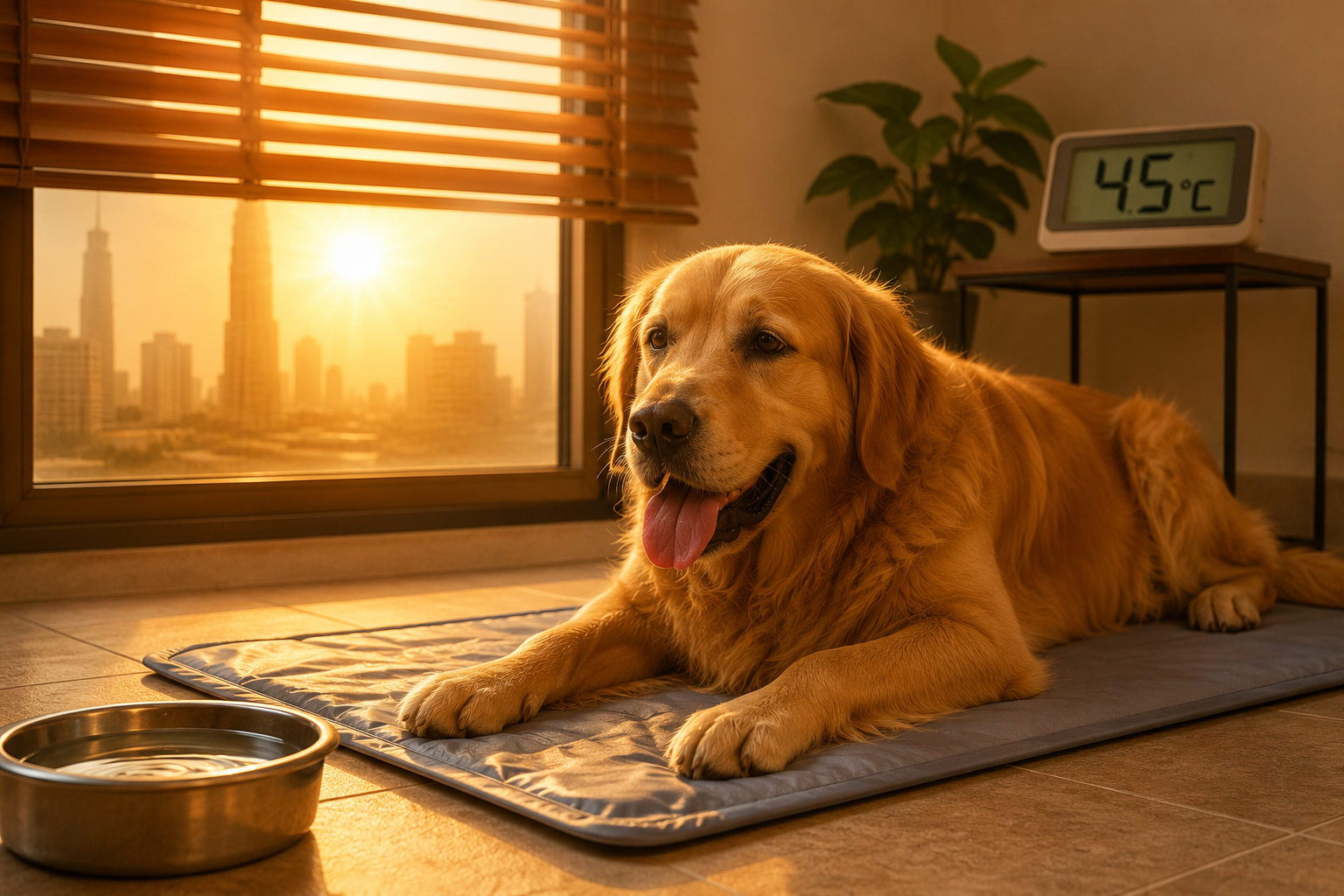
Dubai summers don’t just make your dog pant a little more. They kill. Temperatures push past 45°C. Pavement hits 70°C. Humidity sits at 80–100%, rendering a dog’s only cooling mechanism panting almost useless. And the worst part? Nearly every heat-related emergency vets see between May and October was entirely preventable.
I’ve spent weeks combing through veterinary guides, real clinic data, and interviews with UAE pet experts. Here’s what you’re probably getting wrong and exactly how to fix it before the next heatwave hits. This summer pet survival guide is built from everything I wish I’d known that morning.
Mistake #1: Thinking “Early Morning” Means 8am
It doesn’t. Not in July.
Eighty percent of heatstroke cases occur between 11am and 3pm, but the danger starts well before that. In the UAE, pavement absorbs heat quickly and releases it slowly. By 8am, asphalt can already be hot enough to burn paw pads.
The fix: Walk before sunrise or after sunset. We’re talking 5am–7am or after 8pm and even then, keep walks to 10–15 minutes maximum. The rest of your dog’s exercise should come from indoor play, puzzle toys, and training sessions.
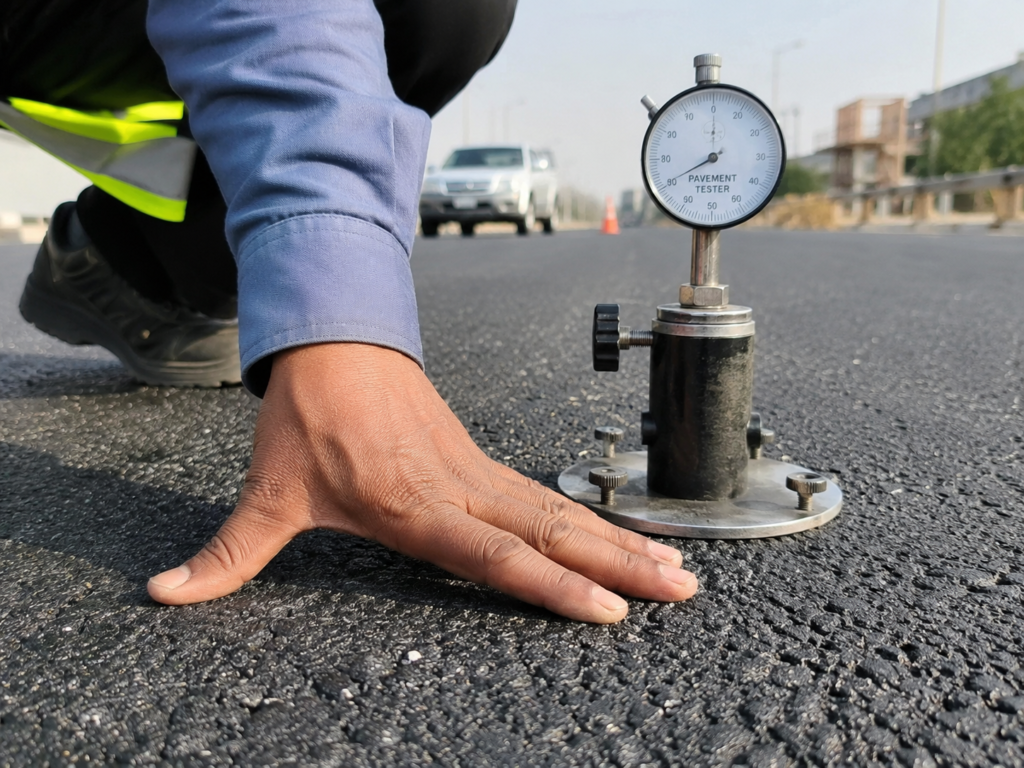
The pavement test: Press the back of your hand against the ground for seven seconds. If you can’t hold it there comfortably, it’s too hot for your dog. Period. No negotiation. Your dog doesn’t know when enough is enough they’ll keep walking to please you, even as their paws burn.
Mistake #2: Assuming Your Dog Will Stop When They’re Overheating
Dogs, unlike humans, have no natural alarm when they’re suffering from heatstroke. We know to stop and cool down when we feel ourselves overheating. Dogs just keep walking. They’ll chase that toy right into a crisis.
Humans cool down through sweat glands all over our skin. Dogs have them only on their paw pads. Their main cooling mechanism panting becomes almost useless in Dubai’s humidity, and their internal temperature rises uncontrollably.
Here are the signs your dog is suffering from heatstroke:
- Excessive panting that doesn’t slow down after you stop.
- Thick, stringy drool sometimes tinged with blood.
- Gums that turn bright red or grey both mean severe shock is underway.
- Glassy eyes, a staggering walk, and that “not quite there” look.
Cats are even harder to read. A cat will suffer quietly and only show symptoms when things are already serious. Watch for open-mouthed breathing, drooling, and stumbling. Any open-mouthed breathing in a cat is an emergency. Don’t wait.
Mistake #3: Reaching for Ice When Your Pet Overheats
This one kills pets. I need you to understand why.
When you apply ice or submerge an overheated dog in freezing water, the skin’s blood vessels constrict a response called peripheral vasoconstriction. This traps the heat inside the body’s core, exactly where it’s causing organ damage. The pet feels cooler to your touch, but their liver, kidneys, and brain are still cooking. This creates a false sense of recovery while internal damage continues.
Do this instead:
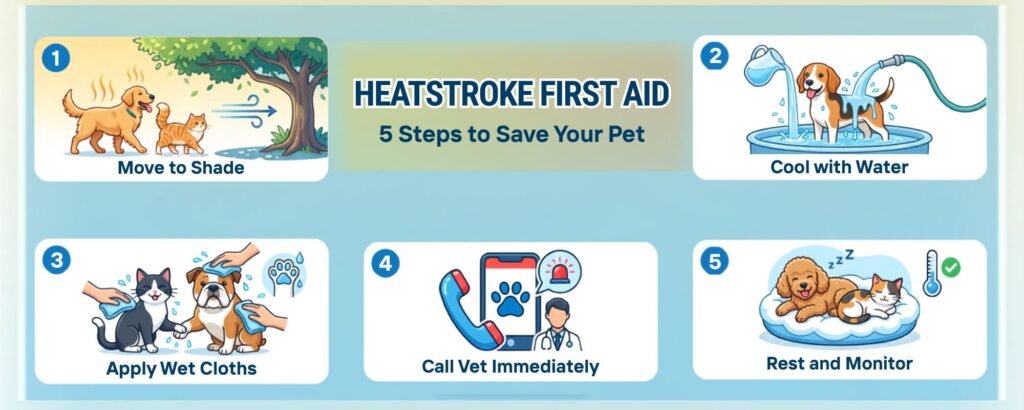
- Move your pet to air conditioning immediately.
- Offer small sips of cool water not ice-cold, not forced, not gulped.
- Apply cool, wet towels to their paws, neck, and belly the areas where heat exchange is most efficient.
- Point a fan at them to boost evaporative cooling.
- Get to a vet. Even if your pet seems to recover. Organ damage from heatstroke continues for 24–48 hours after temperature normalizes. This isn’t optional.
Mistake #4: Leaving the Water Bowl and Calling It a Day
Hydration in UAE summer isn’t about filling a bowl. It’s about strategic water placement.
Pets lose moisture 40% faster in desert heat than in milder climates. Water bowls near windows heat up within an hour. Cats picky creatures by nature often refuse to drink from still bowls at all, instinctively preferring running water they perceive as fresher.
What actually works:
- Place multiple bowls in different rooms, refreshed throughout the day
- Add ice cubes to keep water cooler longer
- Switch to ceramic or stainless steel bowls they hold cool temperatures better than plastic
- Invest in a pet water fountain for cats (this alone increases their water intake dramatically)
- Swap a portion of dry kibble for wet food during summer months
- Carry an insulated thermos and collapsible bowl on every walk
Mistake #5: Shaving Your Dog’s Coat for Summer
It seems logical. Heavy coat = hot dog. Remove coat = cool dog.
Wrong.
A dog’s coat is insulation against both cold and heat. Shaving a double-coated breed like a Husky, Golden Retriever, or German Shepherd exposes their skin to direct UV radiation, increases sunburn risk, and can actually make them overheat faster. The coat also protects against heat absorption from the sun.
What to do instead:
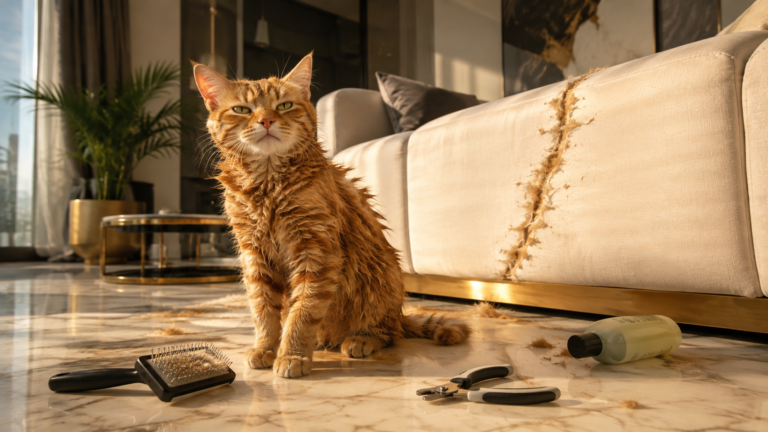
- Brush regularly to remove dead undercoat this is what traps heat
- Schedule a professional summer trim, not a shave
- Book grooming every 4–6 weeks during summer
- Check for skin irritation, redness, or rash during every session
- Keep the hair between paw pads trimmed this prevents heat absorption through the feet
Mistake #6: Forgetting Small Pets and Cats Are Just as Vulnerable
The summer conversation always focuses on dogs. Meanwhile, rabbits are dying in outdoor enclosures because their owners didn’t know they can’t survive temperatures above 30°C.
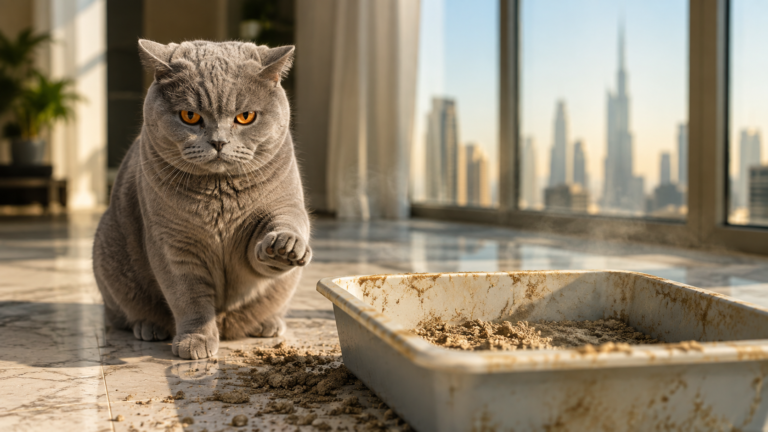
Guinea pigs, birds, and reptiles in outdoor cages are equally at risk. Cats even indoor ones have a narrower thermoneutral zone than dogs and are less efficient at cooling themselves. If your AC fails during the day while you’re at work, your cat has no escape.
The small pet summer checklist:
- Move all outdoor enclosures inside or to fully shaded, ventilated areas
- Place frozen water bottles wrapped in towels in enclosures for small pets to lean against
- Offer frozen vegetables as cooling treats
- Keep cats indoors between 11am and 6pm
- Ensure cats have access to tiled floors bathrooms and kitchens often stay coolest
- Never restrict access to cool surfaces during summer
Mistake #7: The Parked Car
I’m going to say this once. Read it slowly.
A parked car in Dubai summer reaches 60°C inside within ten minutes. At an ambient temperature of just 40°C, the interior becomes lethal in less time than it takes to grab groceries. Windows cracked do nothing. Parking in shade does nothing. Leaving the AC on and hoping it doesn’t fail is a gamble with your pet’s life.
This is also illegal under UAE Federal Law No. 16 of 2016 on Animal Welfare.
If your pet can’t come inside with you, leave them at home in air conditioning. There is no middle ground on this one. None.
Which Pets Are at Highest Risk?
Some pets barely cope with UAE summer. If yours belongs to any of these categories, you don’t get to be casual about heat safety.
Flat-faced breeds — Pugs, French Bulldogs, English Bulldogs, Shih Tzus, and Persian cats. Their shortened airways make panting far less effective. They overheat faster and at lower temperatures than other breeds. These dogs should not be walked outdoors during daylight from May through September. No exceptions.
Senior pets, puppies, and kittens, Their bodies can’t regulate temperature properly. At both ends of life, the cooling system is weak.
Overweight pets, Extra body fat acts as insulation. Heat that would escape a lean dog stays trapped inside.
Thick-coated breeds, Golden Retrievers, Huskies, German Shepherds. These dogs were built for snow, not sand. They overheat fast.
Pets with heart or respiratory conditions, The heat puts extra strain on systems already struggling. For these pets, even a short walk can become dangerous.
What a Vet Visit for Heatstroke Actually Costs
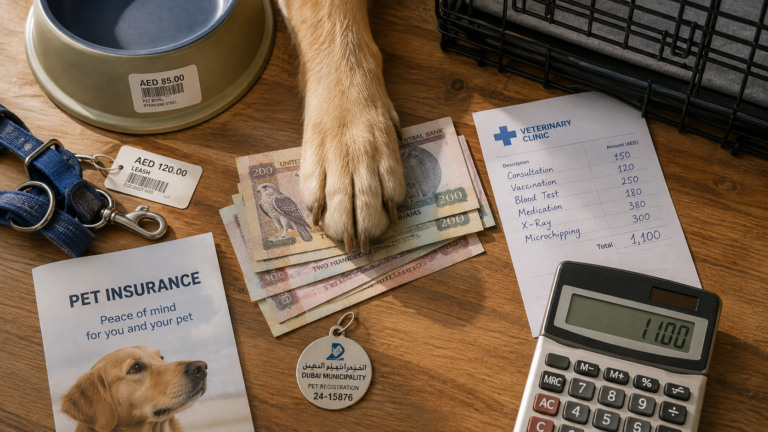
Here’s something most guides don’t tell you: treating severe heatstroke in Dubai is expensive. We’re talking IV fluids, hospitalization, blood work, intensive monitoring bills that can reach several thousand dirhams. Paw burns, breathing crises, and dehydration all add up too.
This is where pet insurance stops being a luxury. When a genuine emergency hits, you want to say yes to the best treatment without the cost being the deciding factor. If you don’t have insurance yet, summer is the wrong time to go without.
The One Sentence That Might Save Your Pet
Heatstroke is a medical emergency even if your pet seems to recover. Internal organ damage to kidneys, liver, and GI tract continues for 24–48 hours after temperature normalizes. A vet needs to assess your pet and may recommend bloodwork to check for organ injury.
When in doubt, get to a vet. The drive there is never the wrong decision. Waiting at home sometimes is.
Have you had a heat scare with your pet in Dubai?
Tell me your story in the comments. It could become the summer pet survival guide that saves another pet’s life.
More from Petingulf.com
In a heat emergency, speed is everything. Your summer pet survival guide isn’t complete without a 24/7 vet already saved in your contacts. I’ve put together a list of the best vets in Dubai that offer round-the-clock emergency care, real prices, and specialist services — so when panic hits, you already know exactly who to call.
Disclaimer: This article is based on veterinary sources, UAE climate data, and expert interviews as of 2026. It is not a substitute for professional veterinary advice. If you suspect your pet is suffering from heatstroke, contact your vet or an emergency animal clinic immediately.

2 Comments