
Cat Allergy: Powerful Ways to Live Happily With Your Cat in UAE
You know that horrible moment when your cat jumps onto your lap, starts purring, and you’re enjoying the cuddle… then five minutes later your nose is blocked, your eyes are itching, and you’re wondering if loving your cat is actually worth the struggle?
I’ve seen how confusing this can be for cat lovers. You want the little furry friend, but your own body seems to disagree. And honestly, that feels unfair.
The good news? A cat allergy doesn’t always mean goodbye to your cat. After looking through real experiences and advice from allergy specialists, one thing becomes clear: many owners in the UAE can make life with cats much easier by reducing allergens, changing routines, and understanding what actually causes the reaction.
Because here’s the thing… it’s usually not the fur.
Cat Allergy Is Not About Fur (That Surprised Me Too)
A lot of people blame cat hair. I did too at first.
But the real troublemaker is a protein called Fel d 1. Cats produce it mainly through saliva and skin glands. When cats groom themselves, this protein sticks to their fur and skin, then spreads around your home through tiny particles called dander.
And those particles are sneaky.
They don’t just sit on your cat. They can settle on sofas, carpets, beds, curtains, and other fabrics around your home.
The biggest lesson: your cat’s fur is carrying the allergen, not creating it.
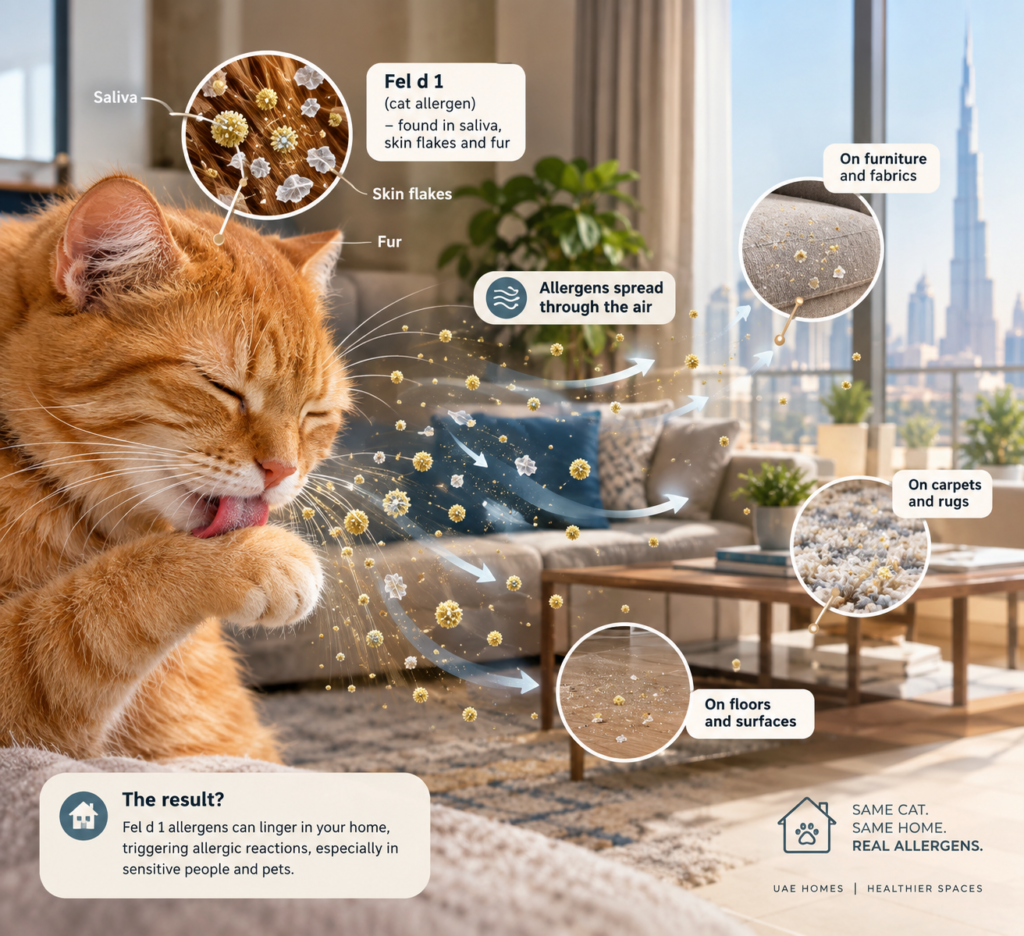
For Dubai and UAE homes, this matters a lot. Many apartments use air conditioning almost all year, meaning allergens can keep circulating indoors if air filters and surfaces aren’t cleaned regularly.
Why One Cat Can Make You Sneeze While Another Doesn’t
Here’s a weird thing many cat owners don’t know.
You might react badly to one cat but barely notice another.
Why? Because cats produce different amounts of Fel d 1. A person may walk into one home and struggle immediately, then visit another cat owner and feel completely fine.
That doesn’t mean one cat is “allergy-free.” No cat truly is.
| Common Belief | What Research Shows |
| Long-haired cats cause more allergies | Hair length doesn’t decide allergen levels |
| Hairless cats are safe | They still produce Fel d 1 |
| Certain breeds guarantee no reaction | No breed is completely hypoallergenic |
| Cat fur itself causes allergies | Proteins on fur and skin are the main trigger |
Honestly, spending time with a cat before adoption is one of the smartest things you can do. A quick visit isn’t perfect, but it can give you a better idea before bringing a new family member home.
The Simple Home Changes That Made Allergy Control Easier
When people hear “cat allergy,” they sometimes think the only solution is giving up the cat.
That’s not always true.
For mild allergies, small changes can make a huge difference.
The first thing I would focus on is your home environment.
A bedroom without cat exposure can become your safe space. Since most of us spend hours sleeping there, keeping that room cleaner can reduce daily exposure.
Things that help:
- Use a HEPA air purifier and clean air conditioning filters regularly.
- Vacuum with HEPA filtration instead of spreading allergens around.
- Reduce fabrics that trap allergens, like heavy carpets and curtains.
And please don’t underestimate regular cleaning in UAE homes. Dust already becomes a challenge here, and adding pet allergens means surfaces need more attention.
Keeping Your Cat Clean Without Going Overboard
I’m not gonna lie, some allergy advice online gets a little extreme.
Bathing your cat constantly sounds logical, right? Less allergen, fewer problems.
But research shared in the sources explains that regular bathing isn’t a magic solution. Cats continue producing saliva, which is where Fel d 1 comes from.
A better approach:
Brush your cat regularly and remove loose hair before it spreads everywhere.
If possible, let a non-allergic family member handle brushing. If you’re doing it yourself, wearing a mask can help reduce exposure.
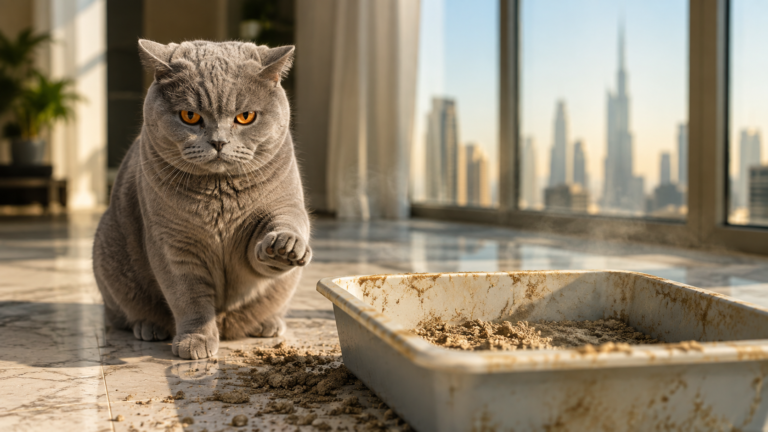
Also, keep the litter box clean. Cat allergens can also be connected with urine, so regular litter cleaning matters.
Can Food Actually Help With Cat Allergies?
This is where things get interesting.
One option discussed in the research is Purina Pro Plan LiveClear, a cat food designed to reduce active Fel d 1 on the cat’s hair and skin flakes.
The idea is simple: special egg-based ingredients contain antibodies that bind to Fel d 1 in saliva.
According to the information provided, daily feeding may reduce active Fel d 1 levels, but it doesn’t remove allergens completely.
| Option | What It May Help With |
| LiveClear cat food | Reducing active Fel d 1 on fur and skin flakes |
| HEPA purifier | Removing floating allergens from air |
| Cleaning routines | Reducing allergen buildup around the home |
For UAE cat owners, this can be useful as part of a bigger plan, not as a single miracle fix.
When Medication or Allergy Treatment Makes Sense
Sometimes cleaning isn’t enough.
If your symptoms include breathing problems, chest tightness, or severe reactions, it’s time to speak with a doctor.
Many people start with allergy medications, antihistamines, or nasal treatments. For stronger allergies, doctors may suggest immunotherapy, also called allergy shots.
The idea is to slowly train your immune system to react less strongly over time.
It takes patience. Years, sometimes.
But for some cat lovers, it can completely change their relationship with pets.
The Truth About “Hypoallergenic” Cats
This one causes a lot of confusion.
People spend extra money searching for a “hypoallergenic” breed, hoping they found the perfect answer.
But there’s a catch.
No cat is completely hypoallergenic.
Even hairless cats produce Fel d 1. Some cats may produce fewer allergens, but there is no guarantee.
So don’t choose a cat based only on internet promises. Choose based on personality, lifestyle, and whether you can comfortably live together.
Final Thoughts: Your Cat Allergy Doesn’t Have to End the Love Story
I keep thinking about that moment every cat owner knows: your cat curls up beside you, completely trusting you, and you just don’t want to push them away.
A cat allergy can make things harder. No doubt about it.
But with smarter cleaning, better air control, realistic expectations, and medical support when needed, many people can still enjoy life with their cats.
The goal isn’t creating a completely allergen-free home. That’s almost impossible.
It’s creating a home where you and your cat can happily share the same space.
Have you ever dealt with a cat allergy while owning a cat? What worked for you in your UAE home? Drop your experience in the comments — I’d love to hear your story.
More from Petingulf
- The Essential Guide to Safe and Stress-Free Pet Relocation
- The One Mistake That’s Making Your Apartment Cat Overweight
- How to Groom Your Cat at Home
Disclaimer: This article is based on veterinary information, allergy expert guidance, and research materials available as of 2026. Always consult your veterinarian or a qualified healthcare professional before making decisions about pet care or allergy treatment.