

How to Adopt a Dog or Cat adoption in UAE (2026) Without Making These Shocking Mistakes
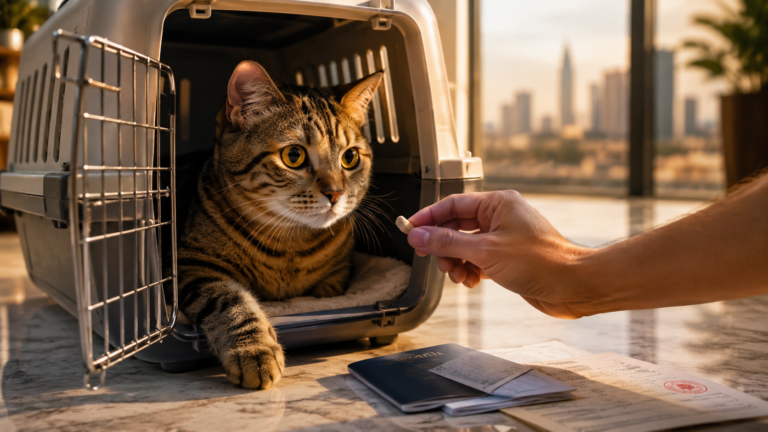
I didn’t mean to end up with a cat. Honest. I walked into a rescue adoption day in Dubai just to “have a look.” You know how that story ends. Two hours later, I’m filling out an application form with a purring tabby on my lap and my wife giving me the look that says we’re definitely taking him home, right? We named him Jack. He cost us 900 dirhams in adoption fees and about 2,000 in the first month on supplies. Best money I’ve ever spent. Worst impulse decision I’ve ever rationalized.
If you’re reading this, you’re probably toying with the same idea. Maybe you’ve been scrolling through rescue Instagram pages at 1am. Maybe your kid’s been asking for a puppy for six months straight. Or maybe you just moved to Dubai, the apartment feels quiet, and you want something furry to come home to. Whatever the reason, you’re in the right place. If you want to know how to adopt a dog or cat adoption in UAE without making the same impulsive mistakes I did, this guide is exactly what I wish I’d had.
I’ve spent weeks digging through shelter websites, interviewing rescuers, and cross-referencing adoption processes across all seven emirates so you don’t have to figure this out the hard way.
This isn’t one of those fluffy “adopt don’t shop” lectures. You already know adoption is cheaper than buying from a breeder. What you probably don’t know is which shelters actually answer their phones, what the hidden costs are, and why one rescue charges 1,250 dirhams while another charges 2,950 for essentially the same dog. Let’s fix that.
Before You Google “How to Adopt a Dog,” Read This Reality Check
Before you fill out a single adoption form, there’s one thing you need to understand. UAE shelters are overflowing. I’m not exaggerating. The Stray Dogs Center in Umm Al Quwain a no-kill shelter run entirely on public donations currently houses around 1,300 dogs. They go through 450 kilos of food every single day. Let that sink in.
K9 Friends in Dubai has about 120 dogs at any given time. The new Dubai Municipality shelter in Warsan, which opened recently, already has nearly 100 cats waiting for homes. And those are just the official numbers. Countless independent rescuers people like Sylvia Chandel, who runs TNR programs out of her own pocket, or the team behind Furballs Rescue founded by Emirati sisters are caring for animals in their own homes, desperately trying to find adopters before they burn out.
The point isn’t to guilt you. It’s to make you understand that when you adopt from a UAE rescue, you’re not just saving one animal. You’re freeing up a space for another one. That’s not marketing. That’s math.
Step 1: Are You Actually Allowed to Adopt?
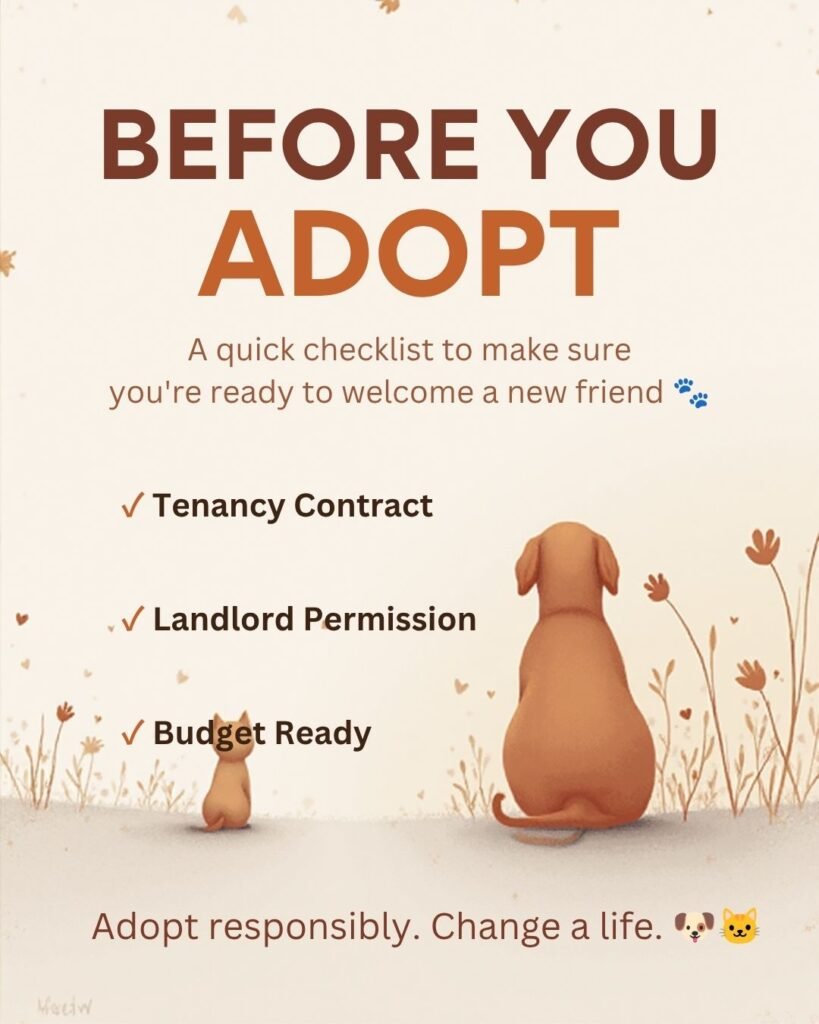
Here’s where a lot of people mess up. They find a dog online, fall in love, fill out the paperwork, and only then discover their building doesn’t allow pets. Now the rescue has held a dog for them, another potential adopter has been turned away, and everyone’s frustrated.
Before you do anything else, check your tenancy contract. I mean physically read it. Look for any clause that mentions pets. If it says “no pets,” you need written permission from your landlord. Not verbal. Written. I’ve heard too many stories of people who got verbal approval, adopted a dog, and then got evicted when a neighbor complained about barking. The landlord’s verbal “yes” suddenly became “I never said that.”
K9 Friends specifically requires apartment dwellers to bring a letter of permission from their landlord before they’ll even process your application. They’re not being difficult they’ve just seen what happens when people skip this step.
If your building allows pets but you’re renting, get the approval in writing anyway. Scan it. Email it to yourself. Keep a copy on your phone. When the rescue asks for it, you’ll have it ready. This one small thing will put you ahead of half the other applicants.
Step 2: Choose Your Rescue (And Know What You’re Getting Into)
Not all rescues operate the same way. Some are government-affiliated, some are volunteer-run, some are basically one person with a WhatsApp group and a vet on speed dial. Understanding the differences will save you time and frustration.
Government & Municipality Shelters
The most affordable option by far. Dubai Municipality’s new shelter in Warsan charges just 230 dirhams to adopt a cat and 260 dirhams for a dog. That fee covers vaccinations, deworming, microchipping, sterilization, and government registration. It’s ridiculously cheap. The catch? The application process is more rigorous.
Dr. Aysha Bin Ghelaita, Senior Veterinary Doctor at the shelter, told Gulf News that they interview every applicant to assess their understanding of animal welfare. “We don’t just give the pet away,” she said. They want to know you understand nutrition, veterinary care, and the long-term commitment. If you pass, the pet is yours. If you don’t, they’ll say no.
You apply through the Dubai Now app or the Dubai Municipality website. You must be at least 21 and have no record of animal abuse or neglect. Simple, but strict.
Established Private Rescues
These are the names you’ll hear most often. K9 Friends (dogs only, Dubai). RAK Animal Welfare Centre (cats and dogs, Ras Al Khaimah). Abu Dhabi Animal Shelter (cats and dogs, managed by Abu Dhabi Falcon Hospital). Stray Dogs Center UAQ (dogs only, largest dog shelter capacity in the country, no-kill policy).
Adoption fees at these places range from 1,250 to 2,950 dirhams depending on the breed, age, and whether the animal is mixed or purebred. A mixed-breed adult dog at K9 Friends costs 1,250 dirhams. A purebred puppy? 2,950 dirhams. RAKAWC charges 1,250 for dogs and 650 for cats. Stray Dogs Center recently raised its fee to 1,900 dirhams to cover rising costs.
What do those fees cover? Microchipping, initial vaccinations, flea and worm treatment, and neutering. If you adopt a puppy under six months, you’ll sign a neuter agreement promising to have it done when they’re old enough. These rescues don’t mess around with this the stray dog problem in the UAE is directly linked to unneutered pets producing unwanted litters.
Smaller Volunteer-Run Rescues
This is where it gets a bit more personal. Groups like Nine Lives (cats, Dubai), Meow Meow Rescue (cats, UAE-wide), Furballs Rescue (cats, Dubai), and Amanda’s Animal Rescue (dogs, mixed breeds) are run by volunteers who often fund the work from their own pockets.
Their adoption processes are less formal you’ll likely have a Zoom call or a WhatsApp conversation before meeting the animal. Home checks are common but not always mandatory. Fees tend to be lower, around 900 to 1,500 dirhams, and always include vaccinations, microchipping, and sterilization.
What I love about these smaller rescues is the support you get afterwards. When I fostered a cat through Nine Lives (before I eventually adopted Jack), they created a WhatsApp group with me and their team. Any question I had about food, behavior, litter training got answered within hours. That kind of hand-holding is invaluable, especially if you’re a first-time pet owner.
Step 3: The Actual Adoption Process (What Happens When)
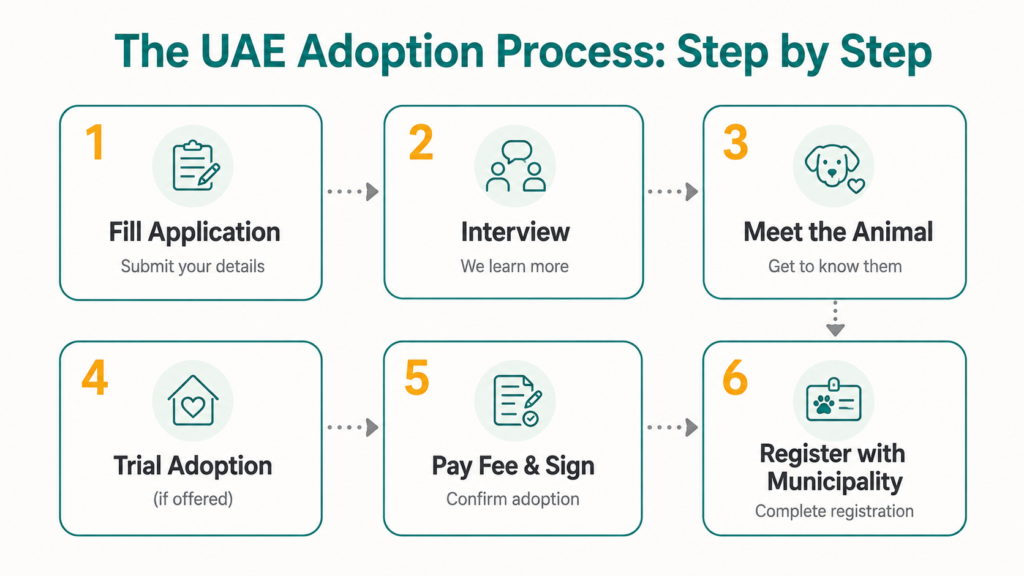
Every rescue has its own version, but the broad strokes are the same.
1: Fill out an application. You’ll provide your Emirates ID, contact details, housing information, and experience with pets. Be honest. If you work 12-hour days, say so. If you’ve never owned a dog before, that’s fine rescues aren’t looking for perfection, they’re looking for honesty and willingness to learn.
2: Interview. Some places do this by phone or Zoom. Others do it in person when you visit. They’re not interrogating you they’re trying to match the right animal with the right home. A high-energy Husky mix isn’t going to thrive in a studio apartment with an owner who’s never walked a dog before. A shy, traumatized cat isn’t going to do well in a house with three rowdy toddlers. Let them guide you.
3: Meet the animal. Bring the whole family. Bring your existing dog if you have one. K9 Friends insists on this, and for good reason — you need to see how everyone interacts before you commit. Don’t just fall for the first cute face. Spend time with a few animals. Ask about their history, their temperament, any behavioural quirks. Some rescues will do a home check at this stage. Others do it after a trial period.
4: Trial adoption (sometimes). Several UAE rescues now offer a 4-week trial period. One rescue I spoke to sets up a dedicated WhatsApp group for new adopters during this time, and the animal technically remains under their care until the trial ends. If things don’t work out — and sometimes they genuinely don’t the animal returns to the rescue with no judgment. This takes the pressure off massively.
5: Pay the fee and sign the contract. You’ll sign an adoption agreement that usually includes a sterilization clause (if the animal isn’t already neutered) and a promise to provide proper care. Then you pay. Then you take your new best friend home.
6: Register with the municipality. Your vet can handle this, or you can do it yourself. You’ll get a pet ID tag that your dog must wear in public. Registration is renewed annually. It’s not optional unregistered pets can result in fines.
What Nobody Tells You About the First Few Weeks
The 3-3-3 rule is real. The first three days, your new pet is going to be overwhelmed. They might hide. They might not eat. They might have accidents. This doesn’t mean something’s wrong. It means they’re processing a massive life change. Give them space. Don’t throw a welcome party. Keep things quiet.
By three weeks, they’ll start settling into routines. They’ll learn when feeding time is, where the litter box or pee pad is, and which spots in the house feel safe. By three months, they should be fully comfortable and showing their true personality.
If you have other pets, keep them separated for at least the first 24 hours. Even the friendliest dog can get territorial when a stranger suddenly appears in their home. Introduce them slowly, on neutral ground if possible, and never leave them unsupervised until you’re absolutely certain they’re comfortable together.
The Financial Reality (Because Vet Bills Don’t Care About Your Budget)
Adoption is cheaper than buying. That’s true. But owning a pet still costs money, and UAE vet bills are no joke.
One Dubai resident I spoke to was charged 170 dirhams for two Zyrtec tablets that cost 15 dirhams in another emirate. A common cold visit ran 1,700 dirhams before being reduced to 700. Emma Brain, who has four rescue pets, told me vaccinations for her two dogs would cost over 1,000 dirhams in Dubai but only 500 in Ajman. The price disparity between emirates is real, and it’s something to plan for.
Does this mean you shouldn’t adopt? Absolutely not. It just means you need a realistic budget. At minimum, set aside 5,000 dirhams as an emergency vet fund. Get pet insurance if you can plans start around 80 dirhams monthly. And know that some of the government shelters and smaller rescues include the initial medical work in their adoption fee, which saves you a significant upfront cost. The Dubai Municipality shelter’s 230–260 dirham fee is a fraction of what private vets would charge for the same services.
Adoption itself is affordable. It’s the years after that you need to plan for. But honestly? When your rescue dog greets you at the door after a long day, or your adopted cat curls up on your chest at night, you won’t be thinking about the money. You’ll be thinking, “This was the best decision I ever made.”
Have you adopted a pet in the UAE?
I want to hear your story the good, the bad, and the unexpected. Drop it in the comments. Your experience might be the thing that convinces someone else to walk into a shelter and save a life.
More from Petingulf:
- The Real Cost of Owning a Dog in Dubai: From Adoption Fees to Emergency Vet Bills
- Best Vets in Dubai for Dogs & Cats: Real Prices, 24/7 Emergency & Specialist Care
- Dubai Summer Pet Survival Guide: 7 Mistakes That Could Cost Your Pet Their Life
Disclaimer: This article is based on shelter interviews, rescue websites, municipal regulations, and owner experiences as of 2026. Adoption fees and processes vary by organisation and may change. Always contact the rescue directly for current requirements. This is not legal or veterinary advice.




3 Comments