
The Shocking Truth About Cat Food in the UAE (2026)
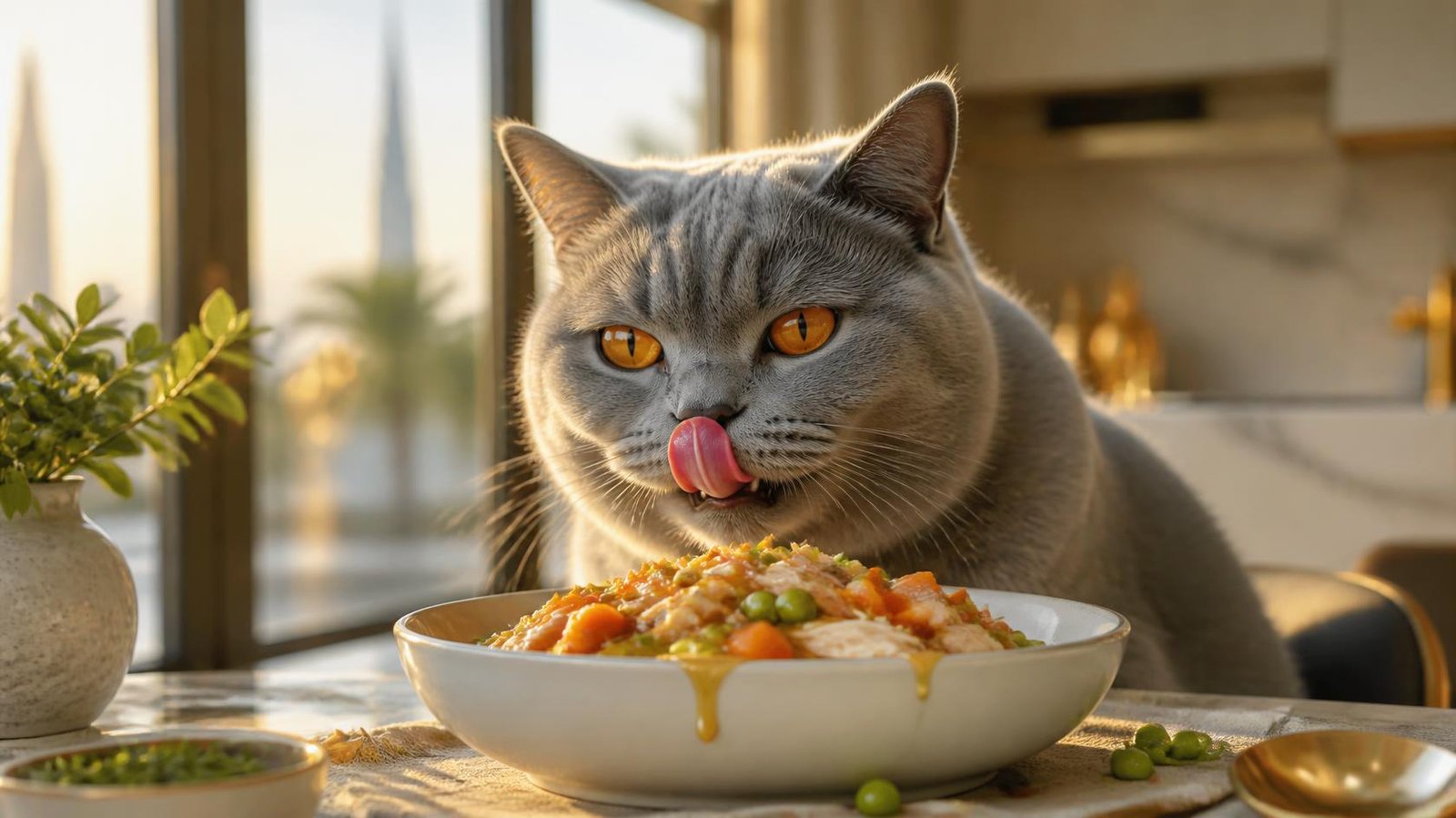
My cat Molly stopped eating.
Not gradually. Not pickily. She just… stopped. Three days. Three different bowls of expensive cat food. Three times I stood there, spoon in hand, begging a ten-pound tortoiseshell to please, please just eat something. The vet in JLT ran tests. Everything came back normal. Try switching her food, he said. Cats in the UAE dehydrate faster than you think. If she doesn’t like what’s in her bowl, she’ll starve herself into kidney problems.
I had no idea cat food could be this complicated. Or this important.
Turns out, most of us are feeding our cats wrong. Not maliciously. Just… blindly. We grab the prettiest bag at the pet shop, assume the word “premium” means something, and never think about it again. But cats are desert animals living in air-conditioned apartments.
They’re obligate carnivores eating kibble made of corn. And in the UAE’s heat, the wrong food doesn’t just disappoint them it quietly damages their kidneys, their coat, their energy, and their lifespan.
I’ve spent months now researching this. Talking to vets. Reading labels that made me want to throw things. Testing foods on my own cats and documenting what actually changed. If you’re standing in a pet store right now, overwhelmed by options, or if your cat has been vomiting more than usual and you’re starting to worry this guide is for you.
Why Your Cat’s Food Matters Twice as Much in This Country
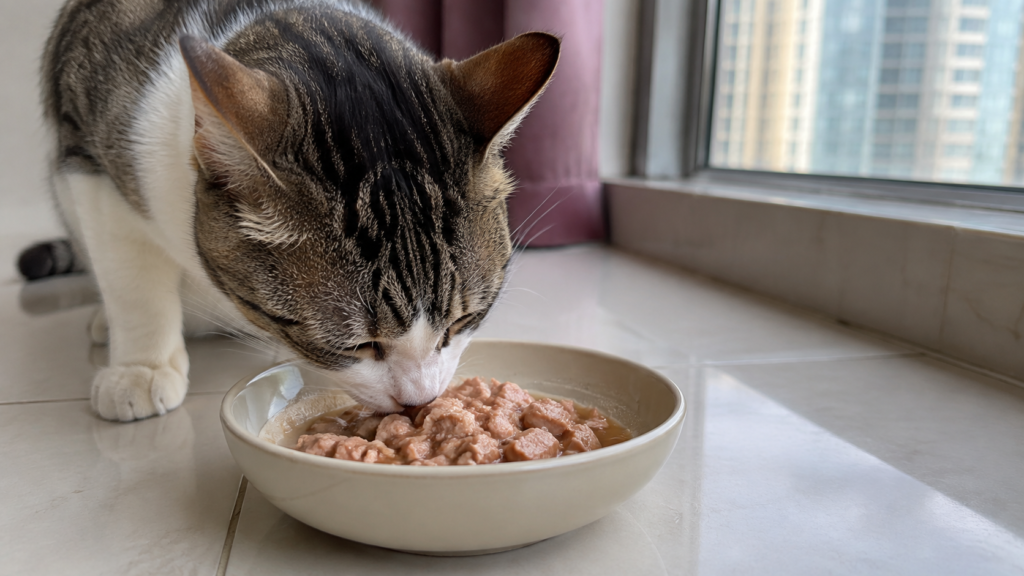
Here’s something most UAE cat owners don’t think about until there’s a problem. Cats are not small dogs. They can’t process carbohydrates the way dogs can. Their bodies are built for meat high protein, moderate fat, almost zero carbs. And they get most of their water from their food, not a bowl.
In the wild, a cat’s prey a mouse, a bird is about 70% moisture. Dry kibble? About 6 to 8%. That gap? It’s the reason so many indoor cats in Dubai end up with urinary crystals, kidney stress, and chronic dehydration. Even if your cat drinks from their bowl, it’s usually not enough. They evolved to eat their water, not drink it.
And then there’s the heat. Air-conditioned apartments dry out the air. Cats who live entirely indoors which is most cats in the UAE are already at a hydration deficit before they even touch their food bowl. Feed them dry kibble exclusively, and you’re compounding the problem with every meal.
This isn’t alarmist. It’s physiology. The cat vet I spoke to at Modern Vet in JLT told me, flat out, The majority of urinary cases we see are indoor cats on a dry-only diet. Not because kibble is evil. Because it’s incomplete for this climate.
Wet Food vs. Dry Food: The Debate That Shouldn’t Be a Debate
I used to free-feed dry kibble. It’s easier. It’s cheaper. It doesn’t stink up the fridge.
But after Molly’s hunger strike and a deep dive into the research, here’s where I landed. A combination of wet and dry food is ideal. But if you can only choose one? Wet wins in the UAE. Every time.
Here’s why, based on research from UAE veterinary clinics and global nutrition experts:
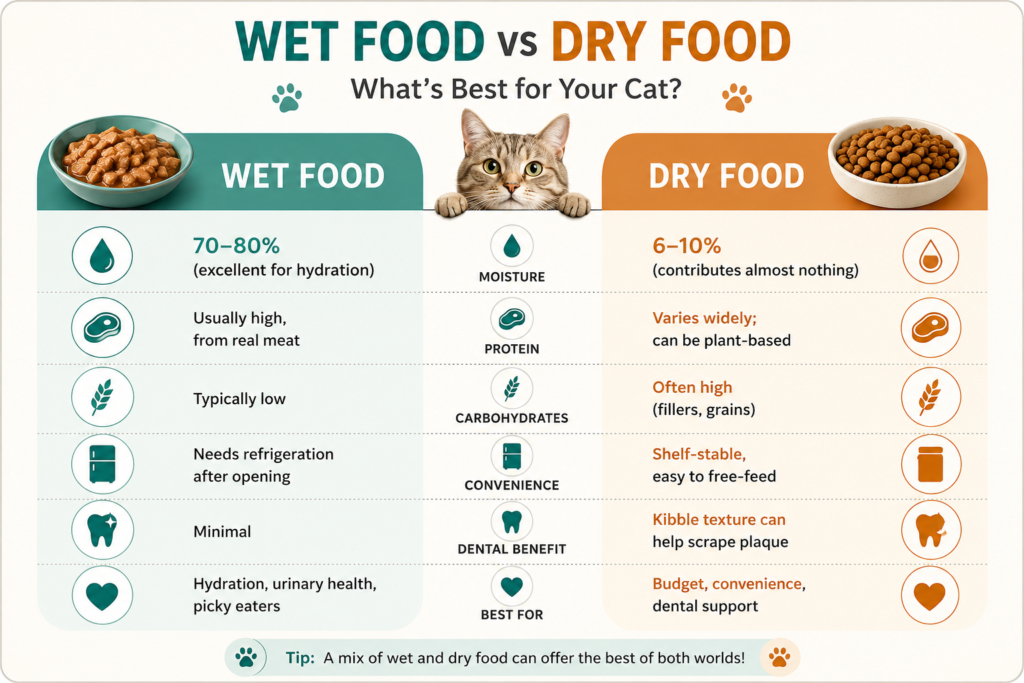
Dr. Judy Morgan, a holistic veterinarian I respect deeply, puts it bluntly: “Kibble is the least ideal. Canned is better. Fresh, raw, or gently cooked is best.” Her reasoning? Cats don’t need carbs. They don’t need synthetic vitamins sprayed onto processed pellets. They need moisture. They need meat. Period.
If you’re in a multi-cat household and need the convenience of dry food, that’s fine. Just don’t make it the only thing in their bowl. Even one wet meal a day makes a measurable difference in kidney health over time, especially for senior cats.
What to Actually Look for on a Label (Without Needing a Degree)
You know that feeling when you flip over a cat food bag and the ingredient list reads like a chemistry textbook? Yeah. Me too.
Here’s what actually matters. The first ingredient must be a named meat. Chicken. Tuna. Salmon. Turkey. Not “meat meal.” Not “animal by-products.” Not “poultry derivatives.” A real, identifiable animal protein.
After that, look for:
- Taurine—essential for heart and eye health. Cats can’t produce it on their own.
- Omega fatty acids—for skin, coat, and reducing inflammation.
- High moisture (wet food) or low carbohydrates (dry food).
- AAFCO or FEDIAF compliance—a statement that the food is “complete and balanced” for the stated life stage.
What to avoid:
- Corn, wheat, soy—cheap fillers that cats don’t digest well.
- Artificial colors, flavors, and preservatives (BHA, BHT, ethoxyquin).
- Carrageenan and excessive guar gum—binders in wet food that can upset sensitive stomachs.
- Generic “meat by-products” or “rendered fats.”
One thing that surprised me during my research? Some of the most expensive brands on the shelf still use these ingredients. Price doesn’t equal quality. You have to read the label. Every time.
The UAE Brands Worth Your Money (And the Ones That Aren’t)
Based on everything I’ve gathered vet recommendations, ingredient analysis, and real-world testing here are the cat food brands that consistently deliver in the UAE market.
For reliable, vet-recommended nutrition:
Royal Canin is everywhere for a reason. Their breed-specific and condition-specific formulas (Persian, Indoor, Urinary Care, Sterilized) are backed by decades of research and used by veterinarians across Dubai and Abu Dhabi.
The ingredients aren’t the cleanest on the market some formulas contain corn and wheat but the nutritional science behind them is solid. If your cat has a diagnosed health condition, this is often the safest starting point. A 2kg bag of Royal Canin Indoor Adult runs about 85–110 AED.
For high-moisture, high-quality wet food:
Kit Cat, a Singapore-based brand, has quietly become one of the best wet food options in the UAE. Their formulas list real fish as the first ingredient, skip the grain fillers, and clock in at 70–80% moisture—which is exactly what UAE cats need. The Purr Puree range doubles as a hydration booster for cats who refuse to drink from a bowl. At 7–15 AED per unit, it’s also genuinely affordable for daily feeding.
For cats with sensitive stomachs or allergies:
Schesir, an Italian brand, uses ultra-clean ingredient lists—whole food proteins, no artificial preservatives, no grain fillers. It’s the most expensive of the three, but for cats with digestive issues, dull coats, or food sensitivities, it often delivers visible improvement within weeks. Their kitten range is particularly excellent for starting young cats on the right nutritional foundation.
For raw or freeze-dried enthusiasts:
Stella & Chewy’s and Furchild (a UAE-based raw brand) offer high-protein, minimally processed options. Furchild is particularly interesting—they deliver frozen raw meals across the Emirates using ethically sourced meats, including camel and ostrich. Just be meticulous about hygiene. Raw meat in the UAE’s heat is not forgiving.
Kitten, Senior, or Sensitive Stomach? Feed the Cat in Front of You
A one-size-fits-all approach doesn’t work. A kitten under 12 months needs higher protein, more calories, and DHA for brain development—Royal Canin Kitten or Purina Pro Plan Kitten are solid vet-recommended options. A senior cat over 7 years needs controlled phosphorus and easily digestible protein to protect their kidneys. And a cat with a sensitive stomach? Limited-ingredient diets with novel proteins (duck, rabbit, lamb) are your best bet. Hill’s Science Plan and Farmina N&D both do this well.
The golden rule? Feed the cat in front of you. Not the one on the marketing label. Watch their coat, their energy, their litter box habits. They’ll tell you if the food is working.
The One Thing I Need You to Remember
Molly eventually ate again. It took three food switches, a lot of wasted money, and a vet visit that cost more than I’d like to admit. But the lesson stuck. The best cat food in the UAE isn’t the most expensive bag on the shelf. It’s the food your cat actually thrives on shiny coat, steady energy, healthy digestion in this specific climate.
Don’t guess. Read labels. Feed moisture. Watch your cat. And if you’re ever unsure, ask a vet who actually listens. Not one who just hands you a brochure.
Because your cat can’t tell you what’s wrong. But if you pay attention, they’ll show you.
What do you feed your cat in the UAE? Have you switched brands because of a health issue? Tell me your story in the comments I read every single one.
More from Petingulf:
- How to Adopt a Dog or Cat in the UAE: Rescues, Fees & The Full Process
- The Best Dog Food in the UAE (2026): What Vets Feed Their Own Dogs & Why
- Best Vets in Dubai for Dogs & Cats: Real Prices, 24/7 Emergency & Specialist Care
Disclaimer: This article is based on veterinary research, brand transparency reports, and local owner experiences as of 2026. Always consult your veterinarian before making significant changes to your cat’s diet, especially if they have existing health conditions.

4 Comments