
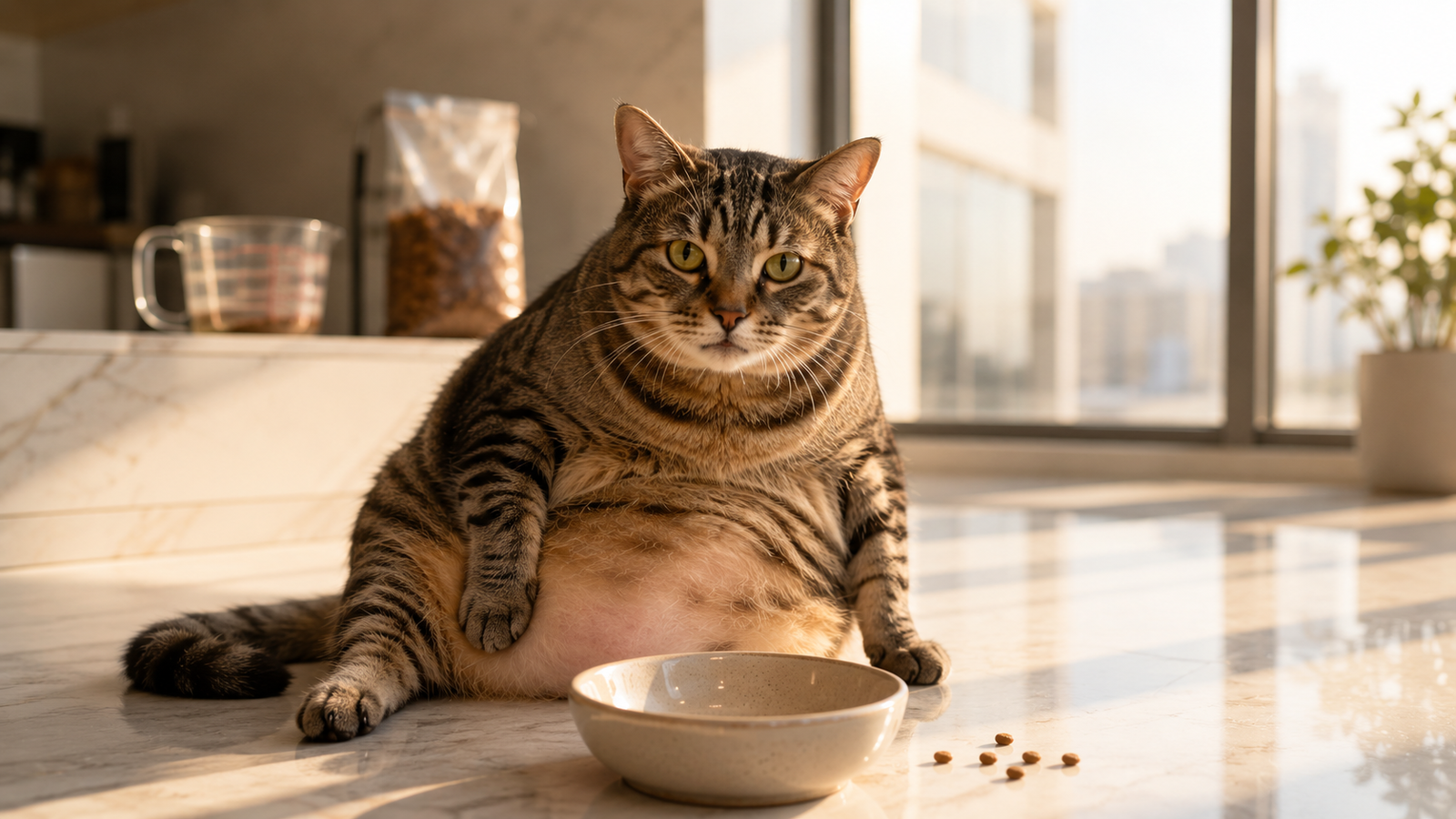
Feeding Indoor Cats in Dubai: The One Mistake That’s Making Your Apartment Cat Overweight
My cat Chloe eats like she’s being timed. She attacks her bowl, finishes in under a minute, and then sits there staring at me like I’ve betrayed her by not refilling it. I used to think she was just food-motivated. Turned out, I was feeding her all wrong.
Feeding indoor cats in Dubai is its own puzzle. The city’s heat, the air-conditioned apartments, the lack of outdoor roaming it all changes how much, how often, and what kind of food your cat actually needs. And if you get it wrong, the weight gain is slow. Silent. Until one day you notice your cat can’t jump onto the sofa without pausing first.
I’ve spent weeks reading feeding guides, talking to vets, and testing routines with Chloe. This is what actually works for indoor cats in a Dubai apartment not the generic advice, but the stuff that matters here.
Why Indoor Cats in Dubai Gain Weight So Easily
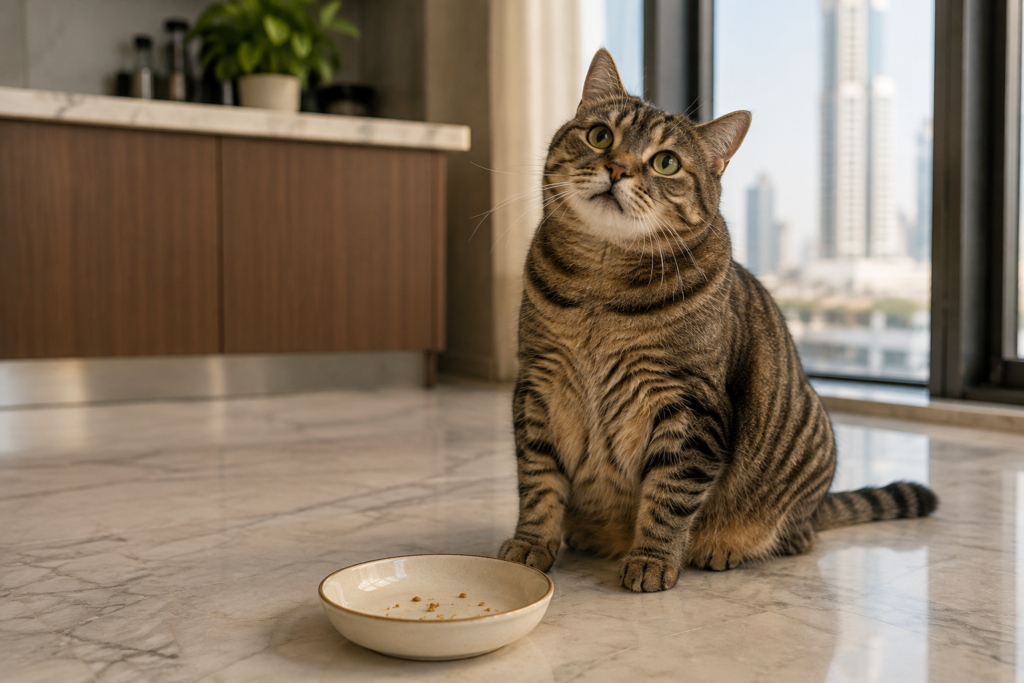
Here’s the brutal truth. Indoor cats use far fewer calories than outdoor cats. They don’t hunt, they don’t roam, they don’t burn energy just surviving the heat. They sleep. A lot. And every extra kibble becomes fat.
Dubai’s climate makes it worse. When it’s 45°C outside, nobody’s taking their cat for a stroll. Air-conditioning keeps us comfortable, but it also means your cat moves even less. That’s why portion control matters more than the brand of food. You can feed the most expensive, organic, grain-free diet on the market—if you overfeed it, your cat still gets obese.
And obese cats don’t just look round. They’re at higher risk for diabetes, arthritis, urinary problems, and a shorter life. All from a few extra grams a day.
How Much Should You Feed Your Indoor Cat?
There’s no one-size-fits-all number. It depends on age, weight, activity, and whether you feed wet or dry. But here’s a practical starting point based on the research:
Dry food only:
- 3–4 kg cat: 40–55 grams per day
- 4–5 kg cat: 55–70 grams per day
Wet food only:
- 3–4 kg cat: 2–3 small cans per day
- 4–5 kg cat: 3–4 small cans per day
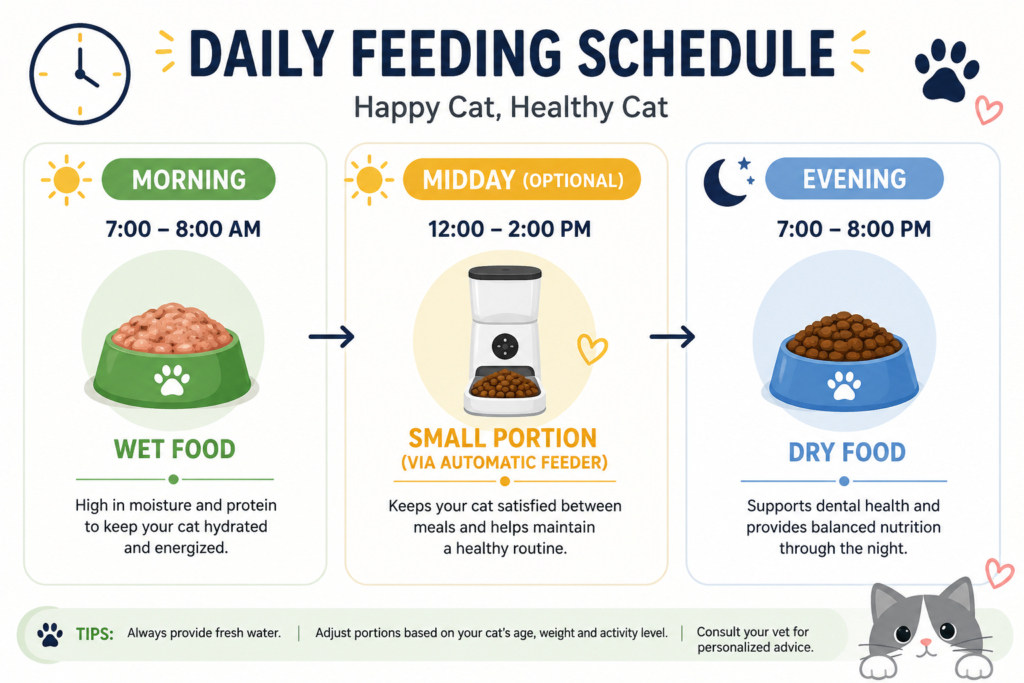
But honestly, most cats do best with mixed feeding. Wet food for hydration and satiety, dry food for convenience and dental benefit. A common Dubai routine is wet food in the morning, measured dry food in the evening. Simple, predictable, and keeps the cat from feeling deprived.
Never free-feed an indoor cat. It’s the fastest way to an overweight, bored, food-obsessed animal. Cats in the wild eat 10–15 tiny meals a day, but they hunt for each one. In an apartment, free-feeding just turns eating into a boredom activity.
The Feeding Schedule That Calmed My Cat Down
Chloe used to scream at me every time I walked near the kitchen. She associated me with food. Now I feed her on a strict schedule: morning wet food, evening dry food, and that’s it. The screaming stopped after a few days because she learned the food comes at the same time, not when she yells.
Cats are crepuscular most active at dawn and dusk. Feeding them around those times matches their natural rhythm. If you work long hours, an automatic feeder can dispense small portions during the day, but don’t rely on it as a free-for-all. Portion control still matters.
Why Wet Food Is Your Secret Weapon in Dubai
Cats don’t drink enough water. It’s just how they’re wired. In the wild, they get most of their hydration from prey. In a Dubai apartment, with air-conditioning drying the air, dehydration becomes a real risk—and it shows up as kidney problems and urinary tract issues later in life.
Wet food is about 70–80% water. That means every meal is also hydration. If your cat eats mostly dry food, you need to work harder to get them to drink: water fountains, multiple bowls, bowls placed away from the litter box. But the easiest fix is simply adding wet food to the daily routine.
Dr. Sarah Wooten, a veterinarian I trust, says something that stuck with me: “Feed the can, not just the bag.” Canned food is higher in protein, higher in moisture, and keeps cats fuller longer. It’s not a treat it’s a necessity for indoor cats in a hot climate.
Make Mealtime Hunt Time (Without the Mess)
Cats are hunters. They want to work for their food. In an apartment, that instinct goes unfulfilled, which leads to boredom, anxiety, and that 3am sprint across your face.
The solution? Food puzzles and hidden portions. Take part of your cat’s daily dry food allowance and hide it in puzzle feeders, rolling balls, or just around the house. Let them sniff, paw, and work for it. It slows eating, burns mental energy, and makes mealtime last longer than ten seconds.
This isn’t just enrichment fluff. It’s the same tactic zoos use to keep big cats from going stir-crazy in enclosures. Your apartment is an enclosure too. Make it interesting.
The Biggest Feeding Mistakes I Made (And You Probably Are Too)
- Overfeeding by “just a little.” A few extra kibbles a day adds up to weight gain over months.
- Free-feeding dry food. Convenient, but disastrous for indoor cats.
- Too many treats. Treats should make up less than 10% of daily calories. Not a whole second meal.
- Not adjusting after neutering. A neutered cat needs fewer calories, not more.
- Ignoring the body condition score. You should be able to feel your cat’s ribs under a thin layer of fat. If you can’t, they’re overweight.
The Bottom Line
Chloe is still food-obsessed. She still stares. But she’s at a healthy weight now, and she can jump onto the sofa without hesitating. Feeding indoor cats in Dubai isn’t about perfection—it’s about consistency. Pick a schedule, measure the food, add wet food for hydration, and stop free-feeding. Your cat will be healthier, and you’ll stop feeling guilty every time you walk past the food bowl.
What’s your indoor cat feeding struggle? Overeater? Picky eater? Screamer? Drop it in the comments I read every one.
More from Petingulf:
- The Best Cat Food in the UAE (2026): What Vets Actually Feed Their Own Felines
- Cat Grooming Near Me in Dubai That Doesn’t Stress Out My Cat (Or Me)
- Best Vets in Dubai for Dogs & Cats: Real Prices, 24/7 Emergency & Specialist Care
Disclaimer: This article is based on veterinary feeding guides, local research, and personal experience as of 2026. Always consult your veterinarian for personalized feeding advice, especially if your cat has health conditions.


One Comment