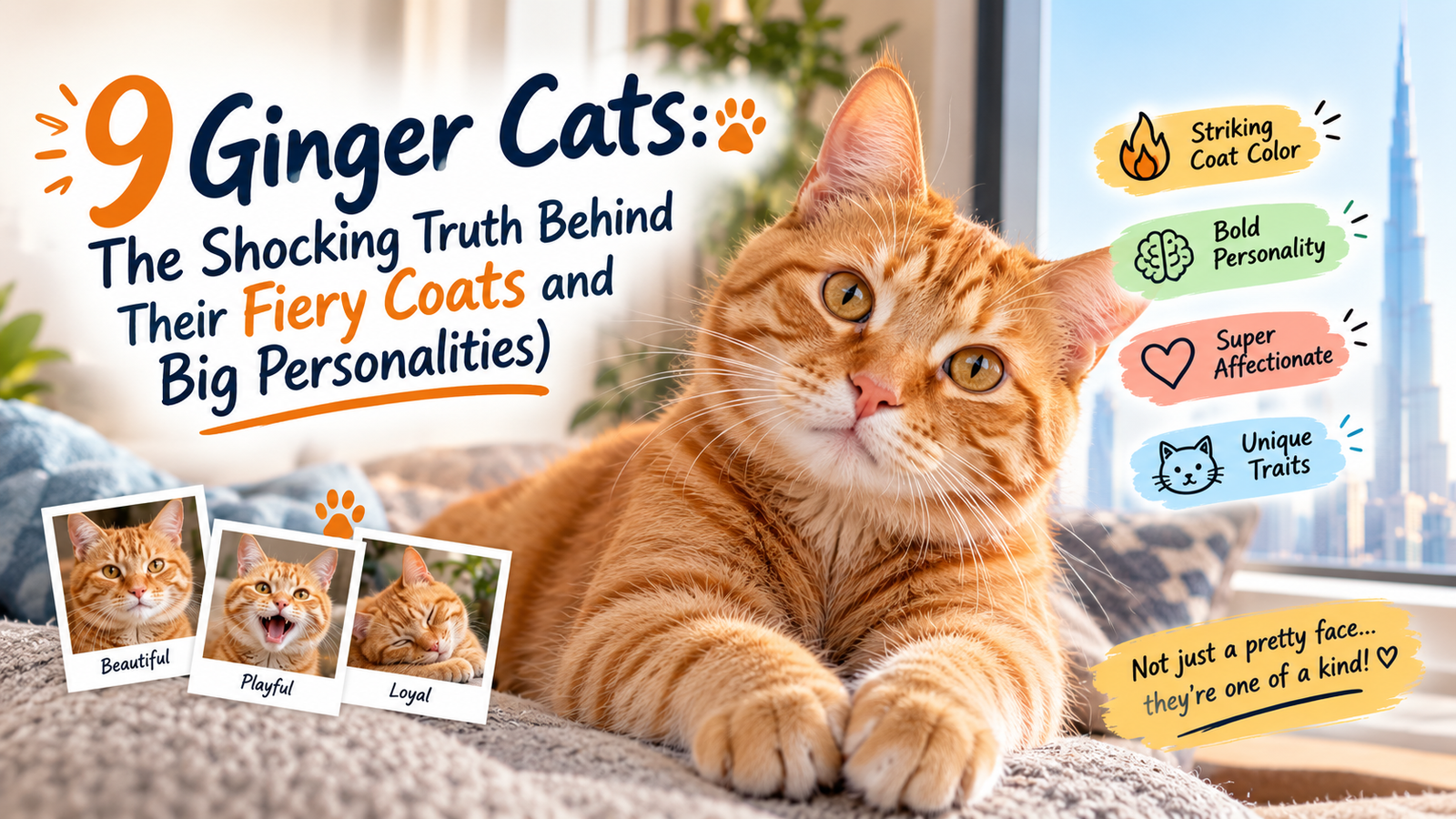
Ginger Cats: The Shocking Truth Behind Their Fiery Coats and Big Personalities
My neighbors’ ginger cat, Marmalade, once walked into my apartment uninvited, hopped onto the sofa, and fell asleep like he’d lived there for years. When I tried to move him, he gave me a look that said, “I’ll leave when I’m ready.” That’s the thing about ginger cats they have a confidence that makes you wonder if they know something you don’t.
I’ve been around cats in Dubai for years, and the orange ones always seem to have this reputation. People say they’re friendlier, more affectionate, even a little bit crazy. But after digging into the research, I realized most of what we believe about ginger cats is a mix of myth, genetics, and good old-fashioned human bias. Let’s separate fact from fiction.
The “Friendly Ginger” Myth: What Science Actually Says
You’ve probably heard that orange tabby cats are the golden retrievers of the feline world—loving, outgoing, and always up for a cuddle. And there’s a study from 2012 that seems to back this up: people rated orange cats as the friendliest. But here’s the catch: that study only measured human perception, not actual cat behavior.
A later study in 2015 found no major personality differences linked to coat color. What’s more likely is that around 80% of ginger cats are male, and most are neutered. Neutered males are typically calm and affectionate. So the “ginger personality” might just be the personality of a neutered male cat who happens to be orange.
And honestly? We see what we expect to see. If your grey cat snuggles up, you think, “Aww, how sweet.” If your ginger cat does the same, you think, “Classic ginger!” It’s confirmation bias in a fur coat.
Why Most Ginger Cats Are Male (And Female Gingers Are Rare)
This is where genetics gets fascinating. The orange color is carried on the X chromosome. Male cats have one X, so they only need one copy of the “ginger gene” to be orange. Females have two Xs, so they need two copies one from each parent.
That’s why only about 20% of ginger cats are female. And here’s a plot twist from recent research: all cats are actually ginger underneath their fur. The ginger colour is the default. Certain genetic material blocks it, and when that material is missing, you get an orange coat. It’s not the presence of an orange gene it’s the absence of a color-blocking one.
So if you meet a female ginger cat, you’re looking at a rare gem. Treat her like royalty.
All Ginger Cats Are Tabby Cats (Even If They Don’t Look It)
You can’t have a solid orange cat. Every ginger cat is a tabby, whether the markings are bold stripes or faint ghost patterns. Look closely: that classic M on the forehead is always there. There are many folktales about how that M got there, but the real reason is in the DNA. The tabby gene creates the pattern, and orange color simply reveals it. It’s biology, not mythology.
There are five main tabby patterns you might see:
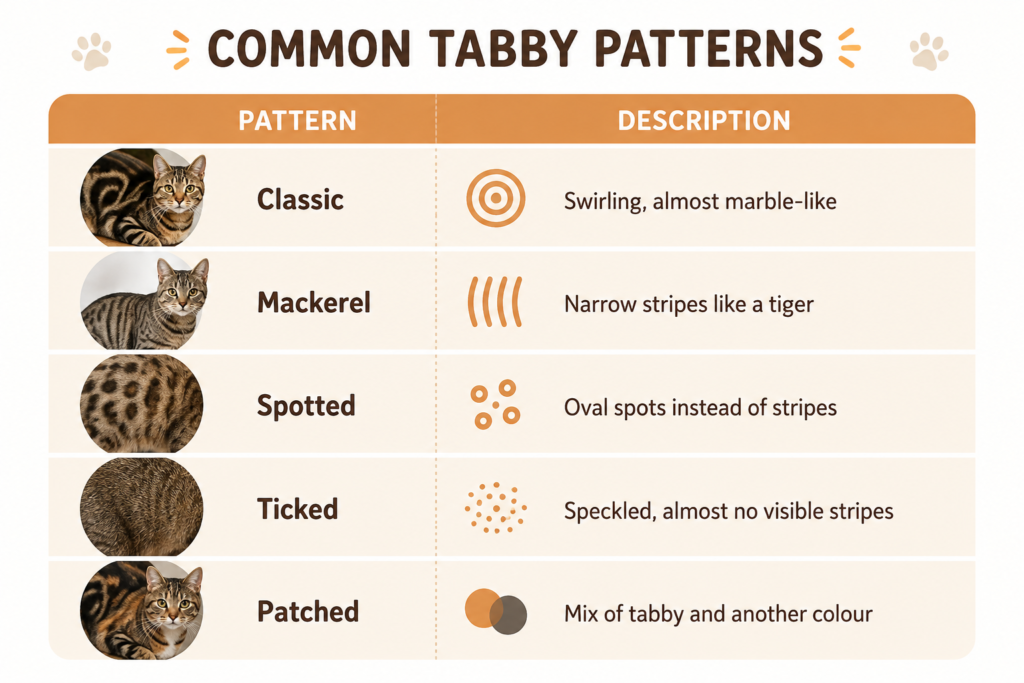
So if you ever see a “solid orange” cat, look again. The stripes are there—they’re just very, very light.
Those Black Freckles? They’re Not Sun Damage
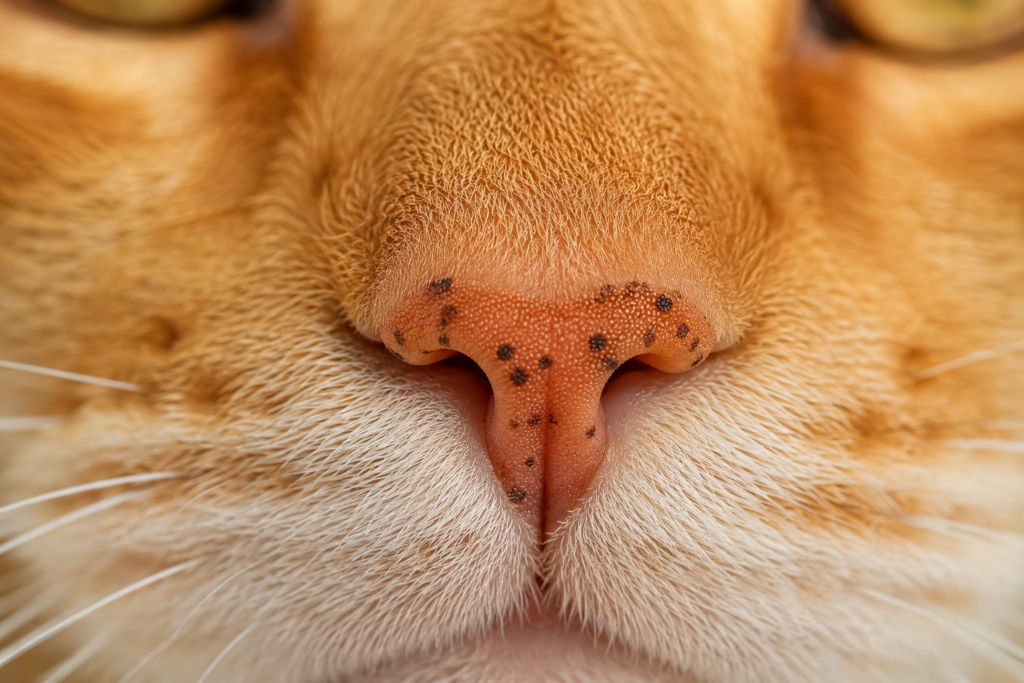
Many ginger cats develop little black spots on their noses, lips, and gums as they age. They’re called lentigo simplex, and they’re completely harmless—just extra pigment cells. They usually appear around one or two years old and are more common in orange cats because the same genetics that give them their coat also cause these spots.
Unlike human freckles, they have nothing to do with sun exposure. If the spots are flat, not bleeding, and not raised, they’re fine. But if you notice changes, a quick vet check is always smart.
Dubai Sun and Ginger Cats: Should You Worry?
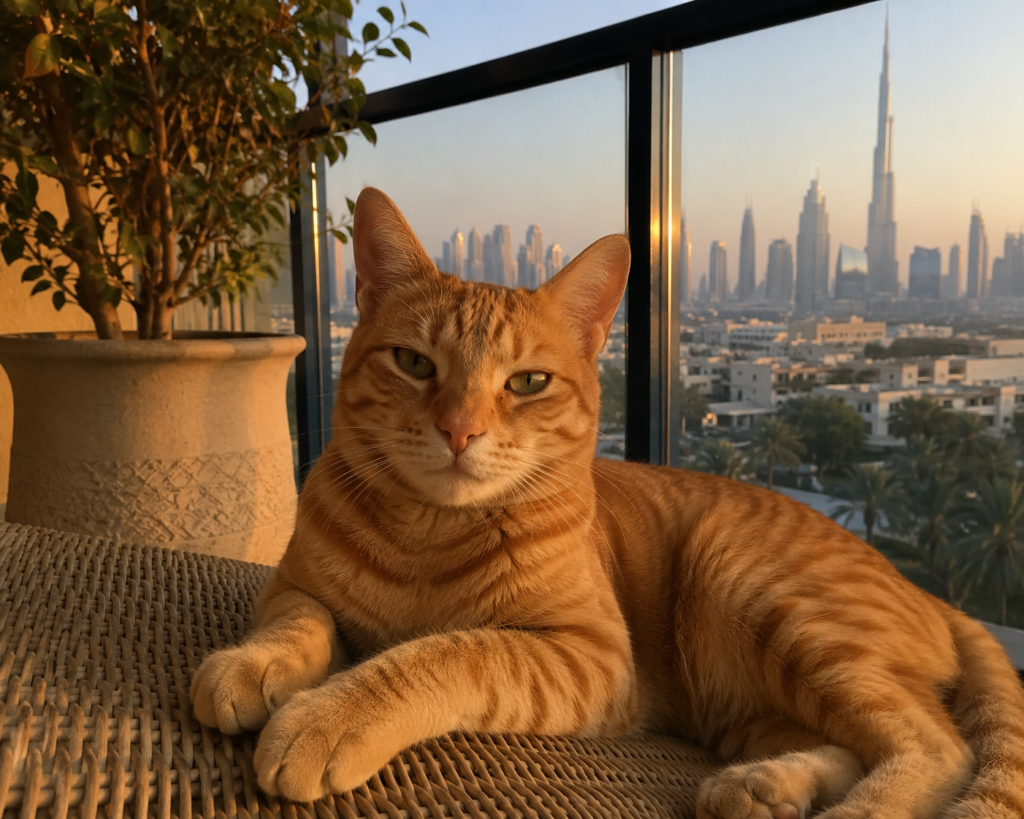
Here’s a UAE-specific angle. We have brutal sun, and light-colored cats are generally more sensitive because their skin has less melanin. But ginger cats have a reddish pigment called pheomelanin. It’s not as protective as the melanin in darker cats, but it’s better than the complete lack in white cats.
Still, if your ginger cat loves sunbathing on the balcony, keep an eye on their ears and nose. Those areas have less fur and can burn. Pet‑safe sunscreen exists, and it’s worth using if your cat spends extended time in direct sun. When in doubt, keep them inside during peak heat—it’s Dubai, after all.
Famous Gingers You Already Know
From Garfield to Puss in Boots, from Orangey in Breakfast at Tiffany’s to Milo from The Adventures of Milo and Otis, ginger cats have stolen the spotlight for decades. They’re not a breed—they’re a colour—but they’ve built a cultural legacy that makes them feel like one.
The Bottom Line
Marmalade eventually left my sofa, but not before I’d fallen a little bit in love. And that’s the real power of ginger cats: they make you believe they’re special. The science says coat colour doesn’t determine personality, but the way we feel about them certainly does.
If you have a ginger cat, you know what I mean. They’re not just orange—they’re unforgettable.
What’s your ginger cat story? Are they the affectionate stereotype, or do they have their own quirky personality? Drop it in the comments—I read every single one.
More from Petingulf:
- The Best Cat Food in the UAE (2026): What Vets Actually Feed Their Own Felines
- How to Adopt a Dog or Cat in the UAE: Rescues, Fees & The Full Process
- Cat Grooming Near Me in Dubai That Doesn’t Stress Out My Cat (Or Me)
Disclaimer: This article is based on multiple veterinary and feline behavior sources as of 2026. It is not a substitute for professional veterinary advice.