

How to bring your pet to the UAE without losing your mind (2026 Guide)
- You got the process going.
- You booked the movers.
- You said goodbye.
And then it hits you: I have no way of getting my dog into the UAE. Your thoughts spiral. Will she be quarantined? What if I missed a step? What if they send her back? Take a breath.
I spent hours combing through official authority files, airline regulations, and actual expatriate reviews to produce this Guide. With a break, you’ll know exactly what to do, when to do it, and what pitfalls to avoid. Let’s get your pet home.
A law that changes everything. Before we dive into paperwork, you need to know this because it will dictate every decision you make: Pets flying into Dubai must arrive as manifest air cargo. They cannot travel inside the cabin or as checked baggage.
There is one exception:
Etihad Airways allows small cats and puppies inside the cabin when touching down in Abu Dhabi. If your pet is small enough and you fly in AUH then that is a great option for you. Your pets are flying freight for everyone else heading to Dubai.
This is not as scary as it sounds. Airlines like Emirates SkyCargo have dedicated live animal booths that can be temperature controlled and pressurized. But this means you can’t simply add your pet to your passenger booking and check in together. This necessitates a separate freight arrangement.
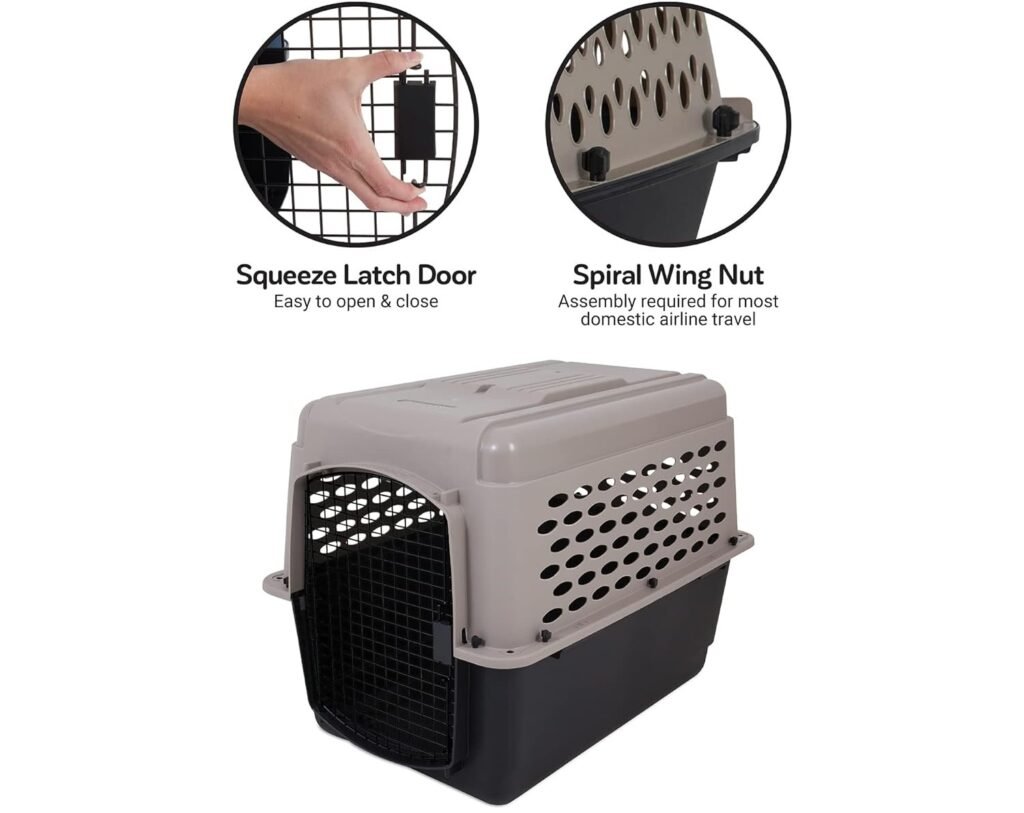
Step 1: Find your starting point (this makes all the difference).
The UAE has special lists of rabies from each country. They divide countries into low-risk and high-risk groups. Good news! If you are relocating from the United Kingdom, Australia, Japan, most of Europe, Singapore, and Hong Kong, you are in low-risk group and your process will be very simple.
Bad news! If you come from US, Canada, India, Pakistan, the Philippines, South Africa and most of the rest of the world, you are in high-risk group and your process is more demanding.
You have one more important procedure: rabies titer testing. Rabies titer testing is really a hidden trap because Bahrain and Qatar are also low-risk nations and don’t need to take a look, but the UAE still requires the test. If you come from Manama or Doha, you’re not exempt.
The complete low risk list that does not require checking is: Andorra, Australia, Austria, Bahamas, Bahrain (in addition to above), Barbados, Belgium, Bulgaria, Croatia, Cyprus, Czech Republic, Denmark, Estonia, Fiji, Finland, French Polynesia, Germany, Greece, Hong Kong, Iceland, Ireland, Italy, Jamaica, Japan, Korea, Kuwait, Latvia, Liechtenstein, Lithuania, Maldives, Malta, Marshall Islands, Mauritius, Micronesia, Montenegro, Netherlands, New Caledonia, New Zealand, Northern Macedonia, Portugal, Seychelles, Singapore, San Marino, Slovenia, Spain (Excluding Melilla), Suriname, Sweden, Switzerland, UK and Vanuatu. Everywhere else is high-risk.
Step 2: Microchip (don’t miss this)
Your pet needs an ISO 11784/11785 compliant microchip (15-digit). This is non-negotiable.
Why does this matter? Because the microchip number must match across every document — health certificates, vaccination data, import permits.
If the numbers don’t match at the border, your pet will be rejected. If your dog’s microchip is not ISO-compliant, bring your own microchip scanner. UAE border officials will have to check it, and if their scanner can’t, you could be in trouble.
Some pet owners from countries with non-standard chips bring their own scanner as a backup. Prior to rabies vaccination, a microchip has to be implanted. If the vaccine comes first and the chip comes later, the vaccine is invalid. This is a common mistake that forces humans to start the whole process over again.
Step 3: Vaccinations (The Non-Negotiable List)
Rabies vaccination is huge.
Here are the rules, and they are strict:
- Your pet must be at least 12 weeks old when vaccinated.
- Vaccination must be given at least 21 days prior to travel and still valid upon arrival. (Check your vaccine manufacturer’s indications some last up to three years.)
- The vaccination must be recorded in your pet’s passport or vaccination booklet, including vaccine name, manufacturer, batch number and date.
However, rabies is not the only vaccine required.
For dogs, you also need:
- Canine Distemper Virus (CDV)
- Canine parvovirus
- Infectious canine hepatitis
- Leptospirosis For cats,
you also need:
- Feline Panleukopenia
- Feline rhinotracheitis
- Feline calicivirus
Each entry must be signed and stamped by an authorized veterinarian.
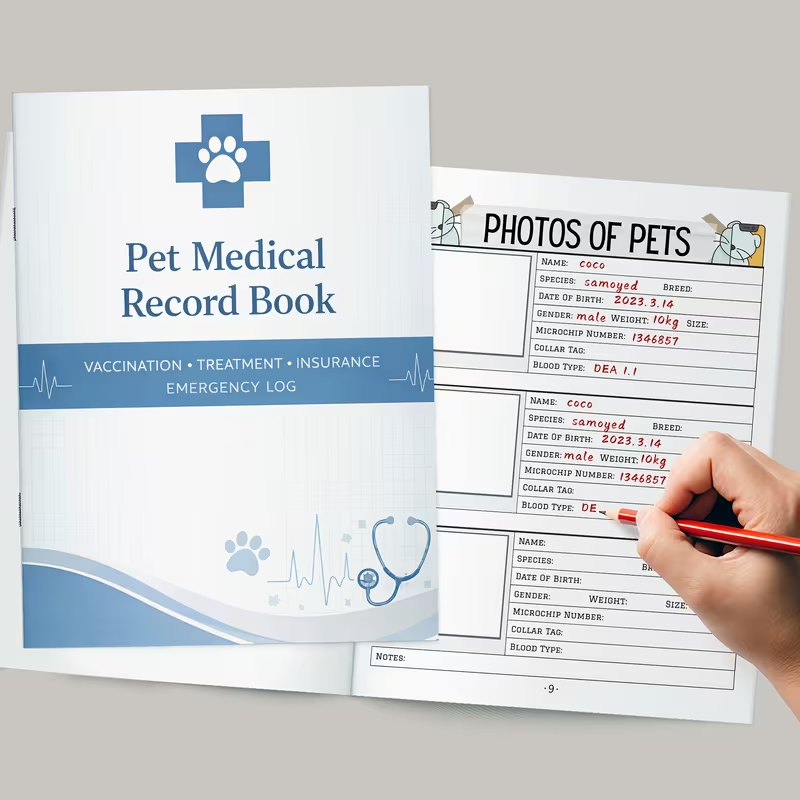
Step 4: Rabies titer testing (high-risk nations required).
If you are coming from high-risk country, this step catches people off guard. A rabies titer test measures the volume of rabies antibodies in your dog’s blood. This proves the vaccine is effective.
Here is the timeline:
- Your pet gets a rabies vaccine.
- You wait at least 21 days (if this is the first vaccination) or proceed immediately if it is a valid booster.
- Your veterinarian draws blood and sends it to an accredited lab.
- The result must be at least 0.5 IU/ml. Anything less, revaccinate and retest.
The test is valid for 365 days, provided the rabies vaccine remains continuously valid. If the vaccine expires and you supply a booster, you need a new titer test.
Important: If your pet arrives from a high-risk country without a valid titer test, they will be quarantined and tested at your expense. Or worse, rejected entirely.
Step 5: The Import Permit (And the 30-Day Trap)
You need to obtain an import permit from the UAE Ministry of Climate Change and Environment (MOCCAE) before traveling. Here’s where things get confusing.
The MOCCAE website states that the permit is valid for 90 days. But multiple pet relocation agencies and practical publications say this is valid for only 30 days. This discrepancy is due to the fact that enforcement practices may also differ from the written law.
My recommendation: Plan for 30 days as if the permit is valid. Apply for it as soon as your travel date is organized and within one month. If you apply too soon and it expires, you will pay again and delay your move. The permit is purchased online through the MOCCAE Virtual Services portal.
You will need:
- Your pet’s microchip number
- Vaccination data
- Your flight and arrival details
Payment: 200 AED in accordance with the import permit (covers up to 2 pets) Processing can take up to 10 working days, so don’t leave this until the last week.
For pets returning to the UAE after departure (resident pets), you do not need a new import permit. Instead, you apply for a Re-Entry Card, provided your pet was microchipped and had a valid UAE health certificate before departure.
Step 6: The Health Certificate (The Final Hurdle)
Within 7 days of departure (and preferably within 24 hours for the very last visual examination), your pet needs a Global Health Certificate issued by the government approved veterinarian. This certificate shall then be referred to as Annex No. 3: Copy of veterinary health certificate for export of cats and dogs to the United Arab Emirates. Your vet will want to complete it in English.
The certificate must confirm:
- Your pet’s microchip number matches all other documents
- All required vaccinations are valid and recorded
- Your pet was treated for internal and external parasites within 14 days before travel
- Your pet was visually examined within 24 hours of departure and found clinically healthy, free of contagious diseases, and free of external parasites
- Your pet is fit to fly
The matching details trap: triple check that your pet’s name, date of birth, microchip number, breed, and coloring matches throughout the health certificate, vaccination data, import permit, and pet passport. A single discrepancy even a typo can result in rejection at the border. I’ve read stories of pets being delayed for days because the birth date was off by one digit.
The health certificate must be endorsed by the official government veterinary authority in your country (USDA in the US, APHA in the UK, etc.).
Step 7: Parasite Treatment (Easy to forget, Easy to do)
In the 14 days leading up to the trip, your pet must be treated for internal parasites. (especially Echinococcus multilocularis, a type of tapeworm) and external parasites (fleas and ticks).
Your veterinarian should document this treatment on a health certificate or record it on a separate document. Don’t skip that. This is checked during the arrival inspection.
Step 8: Travel Crate (IATA-compliant, non-negotiable)
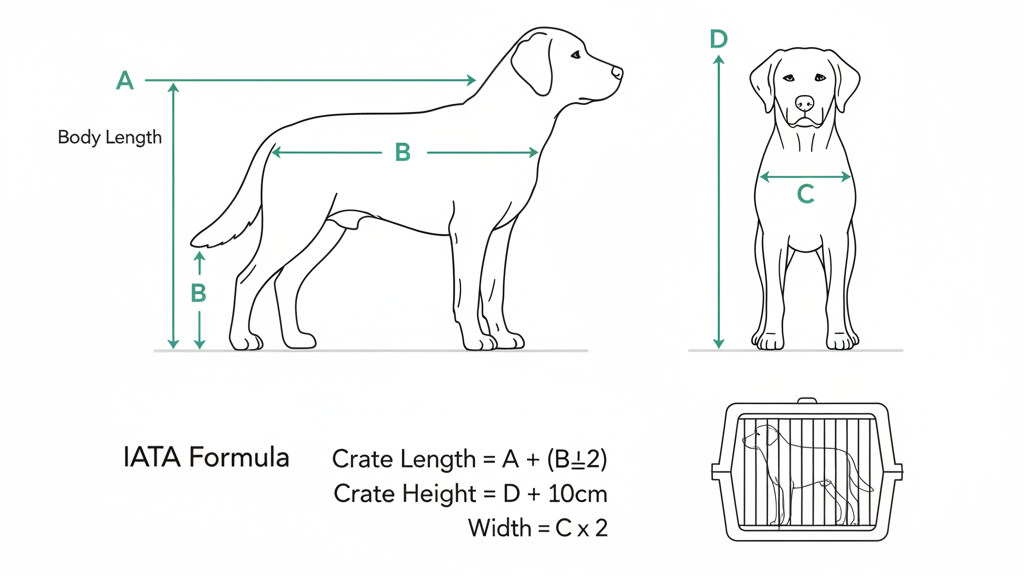
Your pet’s Crate must meet IATA (International Air Transport Association) Live Animal Regulations. Airlines might additionally reject non-compliant crates upon inspection.
The crate must:
- Be large enough for your pet to stand, turn around, and lie down comfortably
- Have secure locking mechanisms (no simple slide bolts — spring-loaded locks are required)
- Include a water bowl accessible from outside
- Have adequate ventilation on at least three sides
- Be clearly labeled with “Live Animal” stickers and orientation arrows
- Include your contact information and your pet’s name
Crate training is important. Start weeks before the flight. Keep your pet’s favorite blanket inside the crate. Add a toy. Let them sleep in it. The objective is to make them feel like a safe den, not a cage.
Don’t use tranquilizers unless recommended by your veterinarian. Sedatives can affect your pet’s ability to regulate body temperature during flight and can be risky at altitude.
Step 9: Restricted Breeds (read this before booking anything)
- Staffordshire Bull Terrier
- Boerboel
- Bullmastiff
- Brazilian Mastiff (Fila Brasileiro)
- Argentine Mastiff (Dogo Argentino)
- Tibetan Mastiff
- Cane Corso
- American Pit Bull Terrier
- American Bully
- Neapolitan Mastiff
- French Mastiff (Dogue de Bordeaux)
- Japanese Tosa
- Rottweiler
- Doberman Pinscher
- American Staffordshire Terrier
- Bully Kutta (Indian Mastiff)
- Perro de Presa Canario
- A boxer
- wolf-dog hybrid.
The exception is if your dog is an authorized service animal, emotional support animal, or medical assistance dog, you may qualify for an exemption.
You will need certified documentation from a training center and a medical report on the owner’s health status.
Dubai-Specific Restrictions:
While your breed is not always restricted, certain breeds face additional restrictions in Dubai.
- Bull terriers
- miniature bull terriers
- huskies
- English Bulldogs
Shar Pei and Perro de Presa Mallorquin must be leashed and muzzled in public, be registered with Dubai’s veterinary services department and cannot live in residences.
There are fewer regulations for cats, but hybrids such as savannah cats (F1 or F2 generation) may face additional controls or refusals. Bengal cats require a pedigree certificate to prove that they were removed from the wild at least fifth-generation.
Airlines add an additional layer. While the UAE allows your breed, your airline doesn’t. Snub-nosed breeds (Persian cats, Himalayan cats, bulldogs, pugs) are often restricted by airlines due to breathing difficulties at altitude. Check with your specific airline.
Step 10: Arrival and Inspection (What Happens at the Airport)
Your pet will arrive at the cargo terminal, not the passenger terminal.
Here are the major entry points:
- Dubai Airport Cargo Village
- Al Maktoum Airport (DWC)
- Zayed International Airport (AUH)
- Sharjah Airport
A government veterinarian will inspect your pet upon arrival. They will check:
- The microchip matches all documents
- The import permit is valid
- The health certificate is complete and endorsed
- Vaccination records are in order
- Parasite treatment is recorded
If everything is in order, your pet is released. There is no automatic quarantine for compliant pets.
If something is wrong, your pet may be:
- Quarantined for 7–21 days at your expense
- Rejected and returned to the origin country at your expense
- In the worst case, confiscated
Practical tip: Provide advance notice to veterinary officials at the arrival airport, especially if your pet lands outside normal business hours. Some airports require prior notification so an inspector is available. A professional pet relocation agent can handle this for you.
Release fees:
- Release of one dog: 500 AED
- Release of one cat: 250 AED
These fees are separate from the import permit fee and are paid during the release process.
The Complete Cost Breakdown
Here’s what you need to budget for. Costs vary by country pet size and airline.
| Cost | Estimated Cost (EUR) | Estimated Cost (AED) |
| Permit to import (MOCCAE) | €150–€250 | 600–1,000 AED |
| Veterinary consultations, vaccinations, deworming | €150–€300 | 600–1,200 AED |
| IATA-approved travel crate | €80–€250 | 320–1,000 AED |
| Cargo transport (airline freight) | €800–€2,500 | 3,200–10,000 AED |
| Release fees (dog: 500 AED, cat: 250 AED) | Included in above | 250–500 AED |
| Total estimated budget | €1,500–€3,500 | 6,000–14,000 AED |
Professional pet relocation services typically assess a package fee that covers the entire process, including permit application, vet coordination, cargo booking, and customs clearance. Companies such as Emirates SkyCargo, Noah’s Ark Pet Transport and ATA offer door-to-door services.
The Timeline: When to Do What
| Time Before departure | Action |
| 4+ months | Confirm microchip is ISO-compliant. Check banned breed list. Begin crate training. |
| 3–4 months | Start vaccinations if not current. Rabies vaccine administered (if not already valid). |
| 3 months | Rabies titer test (high-risk countries only). Wait for results (minimum 21 days post-vaccine for first-time vaccination). |
| 1–2 months | Apply for import permit via MOCCAE online portal. Confirm airline booking. |
| 14 days | Administer internal and external parasite treatment. |
| 7 days | Obtain international health certificate from government-approved vet. Final visual exam. |
| 24 hours | Final vet check and sign-off. |
| Day of travel | The pet travels as cargo (or inside the cabin on Etihad airways to Abu Dhabi). Arrival inspection at the shipment terminal. Pay the release costs. |
| Arrival | Pet released if all documents compliant. Welcome home. |
Three Mistakes That Can Derail Everything
After going through all these sources, here are the three most common and costly mistakes I’ve seen:
1. Assuming the import permit is valid for 90 days when it’s enforced as 30. Apply too early, and it expires before you fly. You pay again and delay your move.
2. Letting your rabies vaccine expire during the titer test waiting period. The vaccine that was valid at the time of the test must still be valid when you enter the UAE. If it expires, you need a new test.
3. A single data mismatch. Microchip number on the health certificate doesn’t match the import permit? Rejected. Date of birth off by one digit? Delayed. Treat every document like a legal contract, because at the border, it is one.
You Can Do This
This guide is long because the process is detailed. But thousands of expats bring their pets to the UAE every year. The system will work if you follow it exactly. Take it step by step. Start early. Double-check everything. And on the day your dog or cat walks into your new UAE home, it will all have been worth it.